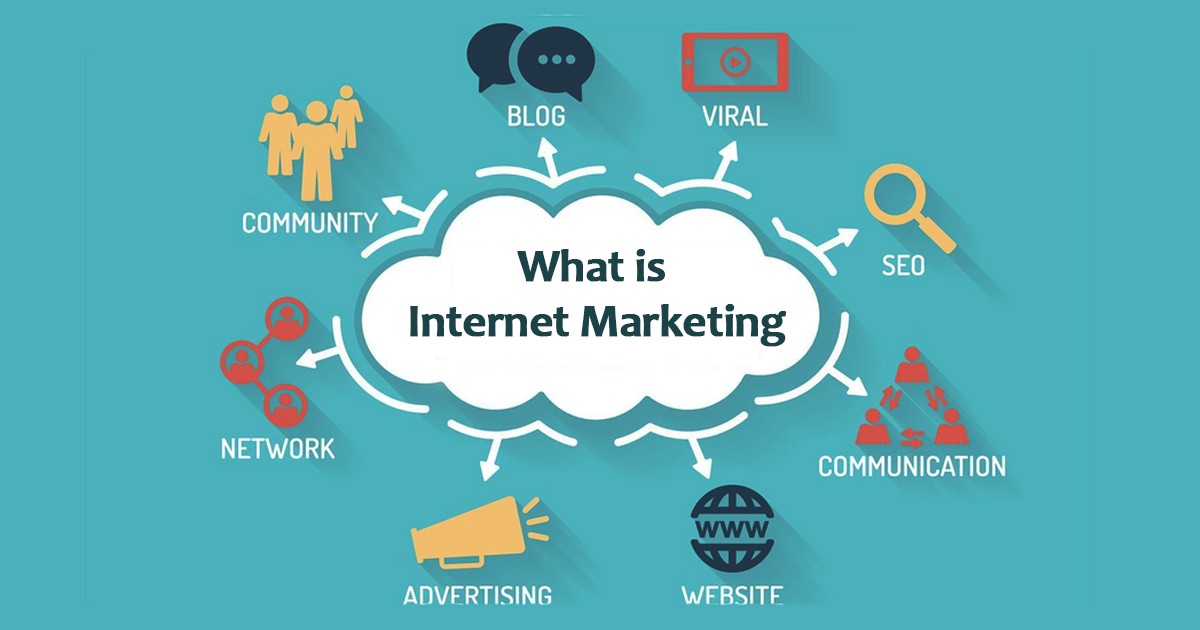
Internet marketing is the strategic use of online channels and digital platforms to promote products, services, or brands to a targeted audience. Also known as online marketing or web marketing, it encompasses every promotional activity that requires an internet connection — from search engine optimization (SEO) and email campaigns to social media advertising and pay-per-click (PPC) ads.
In 2026, global digital advertising spend is projected to surpass $870 billion, and businesses that invest in internet marketing consistently report a $5 return for every $1 spent across integrated campaigns.
Whether you run a small local shop or manage enterprise-level campaigns, understanding internet marketing is no longer optional — it is the foundation of modern business growth.
This guide covers everything you need to know: the definition and mechanics of internet marketing, 10 core channel types, proven strategies, real-world examples, essential tools, and a step-by-step framework to build your own internet marketing strategy from scratch.
Key Takeaways
- Internet marketing refers to all marketing activities conducted over the internet, including SEO, content marketing, social media, email, PPC, affiliate marketing, and more.
- It differs from digital marketing, which also includes offline digital channels like TV ads, SMS, and digital billboards.
- The most effective internet marketing strategies in 2026 integrate multiple channels — SEO for long-term organic traffic, email for retention, PPC for immediate visibility, and content for authority.
- AI-powered personalization, privacy-first data strategies, and short-form video are the three forces reshaping internet marketing this year.
- Businesses typically allocate 7-12% of revenue to marketing, with digital channels claiming 40-60% of that budget.
- ROI timelines vary: PPC delivers results in hours, email in days, social media in 1-3 months, and SEO in 3-6 months — but SEO creates compounding long-term value.
- You do not need a massive budget to start. Many internet marketing channels — such as SEO, content marketing, and organic social media — are accessible to businesses of every size.
What Is Internet Marketing and How Does It Work?
Internet marketing is the process of promoting a brand, product, or service using online channels that require an internet connection. It works by connecting businesses with potential customers at the exact moment they are searching for information, comparing options, or ready to make a purchase.
At its core, internet marketing operates through a simple cycle:
- Attract — Draw potential customers to your digital properties (website, social profiles, landing pages) through SEO, content, paid ads, or social media.
- Engage — Deliver valuable, relevant content that builds trust and positions your brand as an authority. This includes blog posts, videos, email newsletters, and interactive tools.
- Convert — Turn visitors into leads or customers through optimized calls-to-action, landing pages, email sequences, and retargeting campaigns.
- Retain — Keep existing customers engaged and loyal through personalized email marketing, loyalty programs, community building, and ongoing value delivery.
- Measure — Track every interaction using analytics platforms like Google Analytics 4, attribution models, and marketing dashboards to optimize spend and maximize return on investment (ROI).
Unlike traditional marketing (print ads, TV commercials, billboards), internet marketing offers precision targeting, real-time performance measurement, and cost efficiency. You can reach a specific demographic in a specific city searching for a specific product — and measure exactly how much revenue that campaign generated.
The foundation of effective internet marketing is your website. It serves as your owned digital hub — the central destination where all channels (SEO traffic, social referrals, email clicks, paid ad visitors) converge. From there, each channel plays a distinct role in moving prospects through the marketing funnel.
Internet Marketing vs Digital Marketing: What Is the Difference?
This is one of the most frequently asked questions in the industry, and the distinction matters for strategic planning.
Digital marketing is the umbrella term that covers all marketing activities on digital devices or platforms — whether or not they require an internet connection. This includes internet-based channels as well as offline digital channels such as:
- Television advertising
- Radio spots
- SMS and MMS text campaigns
- Digital billboards and signage
- Offline mobile app advertising
Internet marketing (also called online marketing or web marketing) is a subset of digital marketing that specifically requires an active internet connection. It includes:
- Search engine optimization (SEO)
- Pay-per-click advertising (PPC / Google Ads)
- Social media marketing (organic and paid)
- Email marketing
- Content marketing (blogs, videos, podcasts)
- Affiliate marketing
- Influencer marketing
- Display advertising
- Video marketing (YouTube, TikTok, Reels)
- Marketing automation
In practical terms: If your campaign runs through a web browser, social media app, or email client, it is internet marketing. If it runs on a digital medium that does not require the internet (a digital billboard in Times Square, an SMS blast), it is digital marketing but not internet marketing.
For most businesses in 2026, the terms overlap significantly because the vast majority of marketing spend is internet-based. Global digital ad spending is projected to reach $870 billion by 2027, with internet-based channels capturing the lion’s share.
Related Reading: Digital Marketing vs SEO: A Comparison | Digital Marketing vs IMC
10 Types of Internet Marketing Channels
A successful internet marketing strategy rarely relies on a single channel. Instead, it integrates multiple channels that work together across the customer journey — from awareness to purchase to loyalty. Here are the 10 core types of internet marketing, each with its role, mechanics, and ROI profile.
1. Search Engine Optimization (SEO)
SEO is the practice of optimizing your website and content to rank higher in organic (unpaid) search engine results pages (SERPs) on platforms like Google and Bing. It drives 53% of all website traffic and is the highest-ROI channel over the long term.
SEO divides into three pillars:
- On-page SEO — Optimizing title tags, meta descriptions, header structure (H1-H3), keyword placement, internal linking, image alt text, and URL structure.
- Off-page SEO — Building high-quality backlinks from authoritative websites, earning brand mentions, and developing domain authority through digital PR and guest posting.
- Technical SEO — Ensuring fast page speed, mobile responsiveness, clean site architecture, proper XML sitemaps, canonical tags, structured data (schema markup), and crawlability.
In 2026, SEO is evolving into Generative Engine Optimization (GEO) and Answer Engine Optimization (AEO) — where visibility extends beyond traditional rankings to include AI-generated answers, featured snippets, and knowledge panels.
Timeline to results: 3-6 months for meaningful organic traffic growth, but the results compound over time.
Learn more: Digital Marketing vs SEO: A Comparison | Should I Learn SEO or Full Digital Marketing?
2. Content Marketing
Content marketing is the strategic creation, distribution, and promotion of valuable, relevant content designed to attract, engage, and convert a clearly defined target audience. It is 62% less costly than traditional marketing while generating 3x more leads.
Effective content formats include:
- Blog posts and long-form articles — Drive organic search traffic and establish topical authority.
- Video content — Short-form (TikTok, Reels, YouTube Shorts) and long-form (YouTube tutorials, webinars) for engagement.
- Infographics and visual assets — Simplify complex data for social sharing and backlink acquisition.
- E-books, whitepapers, and guides — Serve as lead magnets for email list building.
- Podcasts and audio content — Reach audiences during commutes, workouts, and passive listening moments.
- Case studies and success stories — Build credibility through social proof and real-world results.
The key to content marketing success in 2026 is building topical authority — creating comprehensive clusters of interlinked content around core themes that demonstrate deep expertise to both users and search engines.
Learn more: Digital Marketing Tutorial: The Complete Beginner’s Guide
3. Social Media Marketing (SMM)
Social media marketing uses platforms like Facebook, Instagram, LinkedIn, X (formerly Twitter), TikTok, YouTube, and Pinterest to build brand awareness, foster community engagement, and drive traffic and conversions. With over 5.17 billion social media users globally, it is one of the most powerful internet marketing channels.
Social media marketing operates in two modes:
- Organic social — Building a following through consistent posting, community engagement, conversations, and value-driven content. This nurtures long-term brand loyalty and audience relationships.
- Paid social — Running targeted ad campaigns (Facebook Ads, Instagram Ads, LinkedIn Sponsored Content, TikTok Ads) to reach specific demographics, interests, and behavioral segments with precision.
Platform selection matters. B2B companies often find the highest ROI on LinkedIn, while B2C brands perform best on Instagram, TikTok, and Facebook. Video-first platforms are dominating engagement metrics in 2026.
Social commerce — selling products directly through social media platforms — is projected to exceed $20 billion on TikTok Shop alone in 2026, making social media not just a marketing channel but a direct sales channel.
Learn more: Earning Money on Social Media: 5 Easy Ways | How To Use Facebook Ads Manager
4. Email Marketing
Email marketing is the practice of sending targeted, personalized messages to a subscriber list to nurture relationships, promote products, and drive conversions. It consistently delivers the highest ROI of any internet marketing channel — returning $36-$40 for every $1 spent.
Core email marketing components include:
- Welcome sequences — Automated series that onboard new subscribers and introduce your brand story.
- Nurture campaigns — Drip sequences that educate prospects and guide them through the buyer journey.
- Promotional emails — Product launches, seasonal offers, and flash sales.
- Newsletters — Regular value-driven content that keeps your brand top-of-mind.
- Re-engagement campaigns — Win-back sequences targeting inactive subscribers.
- Transactional emails — Order confirmations, shipping updates, and account notifications that reinforce trust.
Email marketing works best when combined with segmentation (dividing your list by behavior, demographics, or purchase history) and personalization (dynamic content, name tokens, product recommendations based on browsing history).
Marketing automation platforms like Mailchimp, Klaviyo, HubSpot, and ActiveCampaign make it possible to deliver the right message to the right person at the right moment — at scale.
5. Pay-Per-Click Advertising (PPC)
PPC is a paid advertising model where you pay a fee each time someone clicks on your ad. The most common PPC platforms are Google Ads (search and display network) and Microsoft Advertising (Bing Ads). PPC delivers immediate visibility and returns approximately $2 for every $1 spent on average.
Key PPC formats include:
- Search ads — Text ads appearing at the top of Google or Bing results for specific keywords.
- Display ads — Visual banner ads shown across websites in ad networks.
- Shopping ads — Product listing ads with images, prices, and reviews (ideal for e-commerce).
- Video ads — Pre-roll or mid-roll ads on YouTube and partner sites.
- Remarketing / retargeting ads — Ads shown to users who previously visited your site but did not convert.
The strength of PPC lies in intent targeting — you reach people actively searching for products or services related to your business. Combined with smart bidding strategies and A/B testing, PPC can be a highly profitable and scalable acquisition channel.
Learn more: How To Create Compelling Digital Marketing Ads | Google Digital Marketing Course Guide
6. Affiliate Marketing
Affiliate marketing is a performance-based model where businesses reward external partners (affiliates) for driving traffic or sales through the affiliate’s promotional efforts. Three parties are involved: the merchant (product owner), the affiliate (promoter), and the consumer.
Affiliates earn commissions — typically 5-30% of the sale price — by promoting products through blog reviews, comparison articles, email recommendations, social media posts, or dedicated landing pages. The merchant benefits from risk-free marketing since they only pay when a conversion occurs.
Popular affiliate networks include Amazon Associates, ShareASale, CJ Affiliate, and Impact. Many SaaS companies also run direct affiliate programs with recurring commissions (for example, HubSpot offers 30% recurring commissions to affiliates).
Affiliate marketing is projected to continue its strong growth trajectory, with global spend exceeding $15 billion annually.
7. Influencer Marketing
Influencer marketing involves partnering with individuals who have established credibility and a dedicated following on social media or other online platforms. These influencers promote your brand, product, or service to their audience in exchange for compensation, free products, or affiliate commissions.
The landscape has shifted significantly. In 2026, micro-influencers (10,000-100,000 followers) and nano-influencers (1,000-10,000 followers) consistently outperform celebrity endorsements in terms of engagement rate and cost-efficiency. Research shows that 62% of purchase-inspiring influencers have fewer than 10,000 followers.
Effective influencer marketing strategies include:
- Sponsored content and product reviews
- Brand ambassador programs (long-term partnerships)
- Co-created content and collaborative campaigns
- Affiliate-influencer hybrid models (performance-based compensation)
Platforms like Instagram, TikTok, YouTube, and LinkedIn are the primary channels for influencer partnerships, with TikTok seeing the fastest growth in influencer marketing spend.
8. Video Marketing
Video marketing is the use of video content to promote products, educate audiences, and build brand awareness across platforms like YouTube, TikTok, Instagram Reels, and LinkedIn. It is the fastest-growing content format in internet marketing — 88% of video marketers report that video generates leads, and 87% of consumers say they have been convinced to buy a product after watching a brand video.
Key video marketing formats:
- Short-form video (15-60 seconds) — TikTok, Instagram Reels, YouTube Shorts. Highest engagement rates and the dominant content format for discovery in 2026.
- Long-form video (5-30 minutes) — YouTube tutorials, product demonstrations, webinars. Best for building deep trust and authority.
- Live streaming — Real-time engagement through Instagram Live, YouTube Live, LinkedIn Live. Creates urgency and authenticity.
- Video ads — Skippable and non-skippable ads on YouTube, social media, and programmatic display networks.
YouTube remains the second-largest search engine globally, with average mobile app usage of 29 hours per month per user. A well-optimized YouTube channel can serve as both a traffic source and a brand-building asset.
Learn more: YouTube Marketing: A Beginner’s Guide | Top Digital Marketing YouTube Videos
9. Marketing Automation
Marketing automation uses software platforms to automate repetitive marketing tasks — email sequences, social media posting, lead scoring, ad management, and customer segmentation — at scale. It is the operational backbone that makes multi-channel internet marketing manageable.
Benefits of marketing automation:
- Scalable personalization — Deliver the right content to the right user at the right time without manual intervention.
- Lead nurturing — Automatically move prospects through the marketing funnel based on their behavior (page visits, email opens, form submissions).
- Revenue attribution — Track which channels and campaigns generate the most revenue.
- Time savings — Reduce manual work on repetitive tasks so marketing teams can focus on strategy and creative.
Leading marketing automation platforms include HubSpot, Marketo, ActiveCampaign, Mailchimp, and Pardot. Businesses using marketing automation report a 14.5% increase in sales productivity and a 12.2% reduction in marketing overhead.
10. Conversion Rate Optimization (CRO)
CRO is the systematic process of increasing the percentage of website visitors who take a desired action — making a purchase, filling out a form, subscribing to a newsletter, or downloading a resource. It maximizes the value of your existing traffic without increasing ad spend.
Core CRO techniques:
- A/B testing — Testing two versions of a page element (headline, CTA button, image, layout) to determine which performs better.
- Landing page optimization — Designing focused, distraction-free pages with clear value propositions and single calls-to-action.
- Heatmap and session recording analysis — Using tools like Hotjar to visualize how users interact with your pages.
- Form optimization — Reducing friction by minimizing form fields, adding progress indicators, and using smart defaults.
- Social proof — Adding testimonials, reviews, trust badges, and case studies to build credibility at decision points.
Even small CRO improvements can have outsized impact. Increasing your conversion rate from 2% to 3% means 50% more customers from the same traffic — without spending an additional dollar on acquisition.
Why Is Internet Marketing Important? Key Benefits for Businesses
Internet marketing has become the backbone of business growth in 2026 for several fundamental reasons. Understanding these benefits helps justify investment and prioritize channels.
Global reach without geographical limits. A local business can attract customers from across the country or around the world. A single blog post optimized for search can generate traffic for years.
Precision targeting. Unlike a billboard seen by everyone, internet marketing lets you target by demographics, interests, behavior, purchase history, search intent, and even real-time location. This means less wasted spend and higher conversion rates.
Measurable ROI. Every click, impression, conversion, and dollar of revenue can be tracked and attributed to specific campaigns. Tools like Google Analytics 4, marketing automation dashboards, and multi-channel attribution models make it possible to know exactly what is working.
Cost efficiency. Content marketing costs 62% less than traditional methods while generating 3x more leads. Email marketing returns $36-40 per $1 spent. Even paid channels like PPC offer transparent cost-per-acquisition metrics that enable precise budget optimization.
Level playing field for small businesses. A well-optimized blog post from a small business can outrank a multinational corporation on Google. Quality content, smart SEO, and audience understanding matter more than budget alone.
24/7 availability. Your website, email sequences, and automated campaigns work around the clock — generating leads, nurturing prospects, and closing sales even while you sleep.
Real-time optimization. Unlike a print ad that cannot be changed after publication, internet marketing campaigns can be adjusted in real time based on performance data. You can pause underperforming ads, double down on winning content, and continuously refine your approach.
Relationship building at scale. Through email personalization, social media engagement, and community building, internet marketing enables one-to-many relationships that feel one-to-one.
Learn more: 25+ Advantages of Internet Marketing for Business Growth
How to Build an Internet Marketing Strategy: A Step-by-Step Framework
Starting internet marketing can feel overwhelming given the number of channels and tactics available. This practical framework breaks the process into manageable phases.
Phase 1: Lay the Foundation (Weeks 1-4)
- Define clear objectives. What do you want to achieve — brand awareness, lead generation, direct sales, customer retention? Set SMART goals (Specific, Measurable, Achievable, Relevant, Time-bound).
- Identify your target audience. Build detailed buyer personas covering demographics, pain points, information sources, buying triggers, and preferred platforms.
- Audit your current digital presence. Evaluate your website performance, existing content, social profiles, and any past marketing data.
- Build or optimize your website. Ensure it is mobile-responsive, loads in under 3 seconds, has clear navigation, and includes essential pages (homepage, about, services/products, blog, contact).
Phase 2: Master One Channel First (Months 2-3)
Rather than spreading resources thin across every channel, choose one primary channel aligned with your goals and audience:
- If your audience actively searches for your product/service → Start with SEO and content marketing.
- If you need immediate traffic and have budget → Start with PPC (Google Ads).
- If your audience is highly active on social platforms → Start with social media marketing.
- If you already have a customer or subscriber list → Start with email marketing.
Master this channel before expanding to others.
Phase 3: Add Complementary Channels (Months 3-6)
Once your primary channel is producing results, add channels that amplify its performance:
- SEO + email marketing (capture organic traffic, then nurture via email)
- PPC + retargeting (acquire visitors, then re-engage those who did not convert)
- Social media + content marketing (distribute content through social channels)
- Influencer marketing + affiliate programs (leverage external audiences)
Phase 4: Automate and Scale (Months 6-12)
- Implement marketing automation for email sequences, lead scoring, and social scheduling.
- Build a content calendar and publishing rhythm.
- Set up multi-channel attribution to understand which combinations of channels produce the best results.
- Begin A/B testing across all channels to continuously improve performance.
Phase 5: Optimize Continuously (Ongoing)
- Review analytics weekly and monthly.
- Conduct quarterly content audits to update, consolidate, or retire underperforming content.
- Stay current with platform algorithm changes and emerging trends.
- Expand into new channels or formats as capacity allows.
Learn more: Top 10 Internet Marketing Strategies to Boost Leads & Sales | Run a Winning Internet Marketing Campaign in 10 Steps
Proven Internet Marketing Strategies for 2026
Beyond choosing the right channels, these strategic principles separate high-performing internet marketers from the rest.
Prioritize Mobile-First Experiences
Mobile devices drive 69% of all ad spending and account for the majority of web browsing sessions. Every page, email, and ad must be designed for mobile first and desktop second. This means fast load times, thumb-friendly navigation, readable fonts without zooming, and streamlined checkout flows.
Embrace AI-Powered Personalization
AI-driven marketing tools can analyze customer behavior, predict preferences, and deliver hyper-personalized content at scale. In 2026, 75% of consumers are more likely to buy from brands that deliver personalized experiences. AI applications in internet marketing include dynamic email content, personalized product recommendations, predictive lead scoring, and automated ad creative generation.
Build a Privacy-First Data Strategy
With third-party cookies effectively extinct and global privacy regulations tightening (GDPR, CCPA, India’s DPDP Act), first-party data — information you collect directly from your audience with their consent — has become the most valuable marketing asset. Build your first-party data foundation through email sign-ups, account registrations, surveys, and on-site behavior tracking.
Invest in Short-Form Video
Short-form video (under 60 seconds) delivers the highest ROI of any content format — 21% according to recent marketing surveys. Platforms like TikTok, Instagram Reels, and YouTube Shorts have made video production accessible to businesses of every size. You do not need a professional studio — a smartphone, good lighting, and authentic storytelling are enough to start.
Optimize for AI Search and Featured Snippets
Search is no longer limited to ten blue links. Google’s AI Overviews, featured snippets, People Also Ask boxes, and knowledge panels capture significant search traffic. To earn visibility in these features, structure your content with clear question-based headers (H2/H3), provide concise direct answers in the first sentence after each header, and use structured data (schema markup) to help search engines understand your content.
Create Topic Clusters for Topical Authority
Instead of writing isolated blog posts, build topic clusters — a comprehensive pillar page surrounded by detailed supporting articles, all interlinked. This signals to search engines that your site has deep expertise on a subject, boosting rankings across the entire cluster.
For example, this guide serves as a pillar page for “internet marketing,” linking to supporting content on SEO, marketing strategies, marketing campaigns, advantages of internet marketing, and online marketing.
How Much Does Internet Marketing Cost? Budget and ROI Guide
One of the most practical questions businesses ask is how much they should invest in internet marketing. Here is a realistic breakdown.
Budget Benchmarks
- General rule: Allocate 5-10% of total revenue to marketing. New businesses or those in aggressive growth mode may invest 12-20%.
- Digital allocation: Of your total marketing budget, 40-60% should go to internet marketing channels in 2026.
- Small business range: $500-$5,000 per month depending on channels, market competitiveness, and growth goals.
ROI by Channel
| Channel | Average ROI | Time to Results | Best For |
|---|---|---|---|
| Email Marketing | $36-40 per $1 spent | Days to weeks | Retention, nurturing, promotions |
| SEO | Varies (highest long-term) | 3-6 months | Sustained organic traffic |
| Content Marketing | 3x leads vs traditional | 3-6 months | Authority, lead generation |
| PPC (Google Ads) | $2 per $1 spent | Hours to days | Immediate visibility, testing |
| Social Media (Organic) | Brand equity (indirect) | 1-3 months | Awareness, community |
| Social Media (Paid) | Varies by platform | Days to weeks | Targeted reach, retargeting |
| Affiliate Marketing | Performance-based (no risk) | 1-3 months | Scalable sales |
| Influencer Marketing | Varies by creator tier | Weeks to months | Awareness, trust |
Cost-Effective Starting Points
If budget is limited, focus on:
- SEO and blogging — Requires time more than money. A well-optimized blog post can generate traffic for years.
- Email list building — Use a free or low-cost email platform (Mailchimp offers free plans up to 500 contacts).
- Organic social media — Consistent posting on 1-2 platforms costs nothing but time.
- Google Business Profile — Free local visibility for brick-and-mortar businesses.
Real-World Internet Marketing Examples
Understanding internet marketing concepts is valuable, but seeing how leading brands apply them makes the strategies tangible.
Red Bull — Content and Video Marketing: Red Bull built a media empire around extreme sports content rather than traditional product advertising. Their YouTube channel, events, and documentaries generate billions of views and position the brand as synonymous with adventure and energy — driving sales without hard-sell tactics.
Slack — Content Marketing and Word-of-Mouth: Slack grew from a startup to a dominant workplace communication tool largely through content marketing, product-led growth, and amplifying user testimonials. Their blog, social presence, and community-driven content created organic brand advocacy.
Nike — Influencer and Social Media Marketing: Nike partners with athletes and cultural icons across Instagram, YouTube, and TikTok to create aspirational content that resonates with target demographics. Their campaigns blend influencer endorsements with user-generated content for authenticity.
HubSpot — SEO and Inbound Marketing: HubSpot built one of the most visited marketing blogs in the world by creating comprehensive, SEO-optimized educational content. Their strategy of offering free tools (CRM, email marketing) alongside educational content generates millions of monthly visitors and a steady pipeline of leads.
Essential Internet Marketing Tools for 2026
The right tools make internet marketing measurable, scalable, and efficient. Here are the essential categories and leading platforms.
| Category | Recommended Tools | Purpose |
|---|---|---|
| Analytics | Google Analytics 4, Mixpanel | Traffic analysis, conversion tracking, audience insights |
| SEO | SEMrush, Ahrefs, Moz, Google Search Console | Keyword research, rank tracking, backlink analysis |
| Email Marketing | Mailchimp, Klaviyo, HubSpot, ActiveCampaign | Email campaigns, automation, segmentation |
| Social Media | Hootsuite, Buffer, Sprout Social | Scheduling, monitoring, engagement management |
| PPC Management | Google Ads, Microsoft Advertising, Meta Ads Manager | Paid search and social ad campaigns |
| Content Creation | Canva, Jasper, Grammarly, Surfer SEO | Design, AI writing assistance, content optimization |
| CRO | Hotjar, Optimizely, Google Optimize (sunset — use alternatives) | Heatmaps, A/B testing, session recordings |
| Marketing Automation | HubSpot, Marketo, ActiveCampaign, Pardot | Workflow automation, lead scoring, nurture sequences |
| Video | CapCut, Adobe Premiere Rush, Descript | Video editing, transcription, short-form creation |
| Project Management | Asana, Trello, Monday.com | Campaign coordination, content calendars |
Getting started tip: Begin with free tools — Google Analytics 4 for insights, Google Search Console for SEO, Mailchimp’s free plan for email, and Canva’s free tier for design. Scale to paid tools as your campaigns grow.
Learn more: Best Digital Marketing Online Courses | Google Digital Marketing Course Guide
Three Forces Reshaping Internet Marketing in 2026
The internet marketing landscape is not static. Three macro trends are fundamentally changing how marketers plan and execute campaigns.
1. AI Integration Is No Longer Optional
Artificial intelligence has moved from experimental to essential. In 2026, 92% of marketers report that AI significantly impacts their daily work. AI tools now assist with content generation, audience segmentation, predictive analytics, chatbot-driven customer service, programmatic ad buying, and dynamic creative optimization.
Search itself is being transformed — Google’s AI Overviews, Perplexity, and ChatGPT search mean that marketers must optimize not just for traditional SERP rankings but also for AI-generated citations and recommendations. This emerging discipline is called Generative Engine Optimization (GEO).
2. Privacy-First Marketing Requires a New Playbook
With third-party cookies virtually extinct, marketers must build direct relationships with their audience. First-party data — collected through email sign-ups, website interactions, purchase history, and loyalty programs — has become the foundation of targeting and personalization.
By 2026, over 72% of global marketers have rebuilt their strategies around privacy-first data models. This shift rewards brands that provide genuine value in exchange for customer data rather than relying on surveillance-based tracking.
3. Short-Form Video and Social Commerce Are Dominating
Video content — particularly short-form video under 60 seconds — has become the primary format for discovery and engagement across platforms. TikTok Shop sales are forecast to exceed $20 billion in 2026, and Instagram and YouTube continue to expand their shopping features. For internet marketers, this means video production skills and social commerce integration are becoming as essential as writing skills were a decade ago.
Internet Marketing Careers and Opportunities
Internet marketing is not just a business strategy — it is a thriving career field with strong demand and competitive salaries.
Common internet marketing roles include:
- Digital Marketing Manager — Oversees strategy across all online channels.
- SEO Specialist — Focuses on organic search visibility and technical optimization.
- Content Marketing Manager — Plans and executes content strategy.
- Social Media Manager — Manages brand presence across social platforms.
- PPC / Paid Media Specialist — Manages paid advertising campaigns.
- Email Marketing Specialist — Designs and executes email campaigns.
- Marketing Automation Specialist — Builds and optimizes automated workflows.
- Analytics / Data Analyst — Interprets marketing data to drive decisions.
Entry-level positions typically start in the range of $35,000-$50,000 annually, while experienced digital marketing managers earn $70,000-$120,000+. Specialized roles (SEO directors, VP of Growth, CMO) command significantly higher compensation.
Learn more: Career in Digital Marketing: Jobs, Salary & Growth | Become a Digital Marketing Executive | Top Digital Marketing Skills in Demand
Frequently Asked Questions About Internet Marketing
What is the difference between internet marketing and digital marketing?
Internet marketing is a subset of digital marketing. Digital marketing covers all marketing on digital devices (including TV ads, SMS, digital billboards), while internet marketing specifically refers to promotional activities requiring an active internet connection — such as SEO, email marketing, social media, PPC, and content marketing.
How much does internet marketing cost for a small business?
Small businesses typically allocate 7-12% of total revenue to marketing, with digital channels taking 40-60% of that budget. Monthly costs range from $500-$5,000 depending on channels used. SEO and content marketing offer the best long-term ROI, while PPC delivers faster results at higher ongoing costs.
What are the most effective types of internet marketing in 2026?
The most effective types in 2026 are SEO (drives 53% of website traffic), email marketing ($36-40 return per $1 spent), content marketing (generates 3x more leads than traditional methods), PPC advertising (immediate visibility), and short-form video marketing (highest engagement rates across platforms).
How long does it take to see results from internet marketing?
Timelines vary by channel. PPC and paid social deliver results within hours to days. Email marketing shows returns in days to weeks. Social media marketing requires 1-3 months of consistent effort. SEO and content marketing typically need 3-6 months but create compounding long-term assets that continue generating returns.
Can I do internet marketing without a website?
While possible through social media profiles, marketplace listings, and email marketing, a website serves as your owned digital hub and is strongly recommended. It gives you full control over branding, content, and data collection — unlike rented platforms where algorithms and policies can change without notice.
Final Thoughts
Internet marketing in 2026 is not about mastering a single channel — it is about building an integrated, data-driven strategy where SEO, content, email, social, paid media, and emerging technologies work together to attract, engage, and retain customers.
Start with a solid foundation (your website and one primary channel), expand methodically, measure everything, and continuously optimize based on performance data. The businesses that succeed are those that combine strategic thinking with consistent execution — and internet marketing gives you the tools to do both.
Ready to dive deeper? Explore these resources to continue your internet marketing education: