

Key Takeaways
- Digital marketing uses online channels like search engines, social media, email, and websites to promote products and reach customers with measurable ROI and precise targeting capabilities
- 10 essential components form the foundation: SEO, PPC, content marketing, social media marketing, email marketing, mobile marketing, web analytics, CRO, affiliate marketing, and marketing automation
- Career opportunities abound with salaries ranging from ₹1.8 lakhs to ₹50+ lakhs annually for certified digital marketers in India, with demand growing 33% year-over-year
- AI-powered tools like ChatGPT, marketing automation platforms, and predictive analytics are transforming how marketers create content, personalize campaigns, and analyze customer behavior in 2026
- Structured learning through certification programs like CDMM (Certified Digital Marketing Master) provides comprehensive training covering all fundamentals in 200+ hours with hands-on projects
What is Digital Marketing? How Does It Work in 2026?
Digital marketing is the strategic promotion of products, services, or brands through digital channels—search engines, social media, email, and websites—that reaches 5+ billion internet users worldwide.
Before diving into specific digital marketing skills, it helps to understand the broader landscape — our guide on types of marketing covers 35 distinct approaches from content marketing to AI-powered strategies.
For a comprehensive overview of what digital marketing is and why it matters, start with our introduction to digital marketing before exploring the detailed tutorials below.
To dive deeper into the affiliate marketing vertical — including India-specific programs, realistic earning potential, tax compliance, and content strategies — read our dedicated affiliate marketing in India guide.
This comprehensive digital marketing tutorial teaches you the 10 essential components (SEO, PPC, content marketing, social media marketing, email marketing, web analytics, CRO, mobile marketing, affiliate marketing, and marketing automation) that drive measurable business results through data-driven strategies and customer-centric campaigns.
Whether you’re a complete beginner seeking a new career, a business owner wanting to grow online, or a professional exploring digital marketing certification, this tutorial provides step-by-step guidance on how to learn digital marketing from scratch.
By mastering these disciplines, you can access high-paying opportunities with salaries ranging from ₹1.8 lakhs to ₹50+ lakhs annually in India while helping businesses achieve their growth objectives through digital transformation.
Unlike traditional marketing’s broad-reach approach, digital marketing enables precise audience targeting, real-time performance tracking, and cost-effective campaigns that deliver measurable return on investment (ROI).
Every click, conversion, and customer interaction generates data that informs smarter marketing decisions—making digital marketing the most accountable form of promotion available to businesses today.
Why Should You Learn Digital Marketing in 2026?
The digital marketing landscape has evolved into a business-critical function. According to Salesforce, 75% of total marketing budgets now flow to digital channels—a figure that continues climbing as consumer behavior shifts overwhelmingly online.
With over 5 billion global internet users, 60% of shopping journeys beginning with online search, and mobile-first browsing dominating consumption patterns, businesses must establish robust digital presence or risk invisibility to their target customers.
For individuals, digital marketing offers:
- High demand: 33% year-over-year job growth outpacing most industries
- Diverse opportunities: Specialist roles (SEO, PPC, content) and generalist positions (digital marketing manager, growth marketer)
- Flexible work arrangements: Remote work, freelancing, consulting options
- Continuous learning: Ever-evolving field preventing boredom
- Entrepreneurial applications: Skills directly applicable to starting online businesses
For businesses, digital marketing delivers:
- Measurable results: Track every rupee spent and its impact
- Targeted reach: Connect with ideal customers based on demographics, interests, behaviors
- Cost efficiency: Lower customer acquisition costs versus traditional media
- Global accessibility: Reach international audiences from day one
- Customer insights: Data revealing preferences, pain points, buying patterns
Read More: What is Digital Marketing
If you are considering a career in digital marketing, this tutorial covers the foundational skills you will need to get started — from SEO and PPC to content marketing, social media strategy, and the AI-powered tools that are reshaping the industry in 2026.
Semantic Entity Relationships in Digital Marketing
Understanding how digital marketing concepts relate helps build comprehensive knowledge. Here are the key semantic triples (Entity → Attribute → Value):
Core Relationships:
- Digital Marketing → consists of → 10 Core Components
- SEO → has types → On-Page, Off-Page, Technical
- PPC → uses platform → Google Ads, Facebook Ads, LinkedIn Ads
- Content Marketing → creates formats → Blogs, Videos, Podcasts, Infographics
- Email Marketing → uses tool → Mailchimp, HubSpot, ActiveCampaign
- Social Media Marketing → operates on → Facebook, Instagram, LinkedIn, Twitter
- Web Analytics → measures → Traffic, Engagement, Conversions
- Digital Marketer → requires skills → Analytics, SEO/SEM, Content Creation
- CDMM → teaches → Digital Marketing Fundamentals
- Marketing Automation → enables → Personalization at Scale
Advanced Relationships:
- Customer Journey → has stages → Awareness, Consideration, Decision, Retention
- Marketing Funnel → converts → Visitors → Leads → Customers
- Conversion Rate → calculated as → (Conversions ÷ Visitors) × 100
- Attribution Model → tracks → Multi-Touch Customer Interactions
- Marketing ROI → measures → Revenue Generated per Marketing Spend
People Also Ask: Digital Marketing Tutorial
Based on Google’s “People Also Ask” data and search behavior patterns for “digital marketing tutorial,” here are the most common questions searchers have:
Is digital marketing easy to learn for beginners?
Digital marketing fundamentals can be learned in 3-6 months through structured programs, making it accessible for beginners from any background.
The learning curve is moderate—easier than software development but requiring more strategic thinking than basic administrative work.
Success depends on choosing quality learning resources (like CDMM certification), dedicating 10-15 hours weekly to study and practice, working on real campaigns (even personal projects), and staying updated with platform changes. The field rewards continuous learning, analytical thinking, and creativity more than technical complexity.
Which type of digital marketing is best for beginners to start with?
Content marketing and SEO serve as ideal starting points for beginners because they require minimal budget, build foundational skills applicable across channels, deliver compounding long-term results, and allow learning through personal blogs or websites.
These disciplines teach keyword research, audience understanding, writing optimization, and performance measurement—core competencies transferable to all digital marketing areas.
After mastering content and SEO basics, branch into social media marketing (organic posting before paid ads) and email marketing (building subscriber lists and nurturing campaigns).
Can I learn digital marketing in 1 month and get a job?
While basic digital marketing concepts can be grasped in 1 month, landing a job typically requires 3-6 months of comprehensive learning plus practical experience.
In one month, you can understand core principles, complete introductory courses, and start personal projects. However, employers seek candidates who can demonstrate campaign results, tool proficiency (Google Ads, Analytics, social platforms), portfolio projects showcasing skills, and industry-recognized certifications.
Use the first month to build knowledge, then spend 2-5 additional months gaining hands-on experience through internships, freelance projects, or managing campaigns for small businesses.
Is digital marketing a good career choice in 2026?
Yes, digital marketing remains an excellent career choice in 2026 with strong fundamentals: 33% job growth outpacing most industries, salaries ranging from ₹1.8L to ₹50L+ annually based on experience, remote work opportunities offering location flexibility, diverse specializations (SEO, PPC, content, social, analytics) preventing career stagnation, and entrepreneurial applications enabling business ownership.
The field avoids automation threats because it requires human creativity, strategic thinking, and understanding audience psychology—capabilities AI tools augment rather than replace.
For a detailed breakdown of salary ranges, 12 career paths, required skills, and a step-by-step roadmap, read our comprehensive career in digital marketing guide for 2026.
What are the 7 main types of digital marketing?
The core types of digital marketing are:
- Search Engine Optimization (SEO): Organic search visibility through content and technical optimization
- Pay-Per-Click Advertising (PPC): Paid ads on search engines and social platforms
- Content Marketing: Creating valuable blogs, videos, podcasts to attract audiences
- Social Media Marketing: Building presence and community on Facebook, Instagram, LinkedIn
- Email Marketing: Direct communication through personalized email campaigns
- Affiliate Marketing: Performance-based promotion through partner networks
- Marketing Analytics: Data-driven measurement and optimization
Additional types include mobile marketing, video marketing, influencer marketing, and marketing automation—often integrated with the core seven.
How much does digital marketing certification cost in India?
Digital marketing certification costs in India vary widely:
- Free courses: Google Digital Garage, HubSpot Academy, Facebook Blueprint (₹0)
- Budget programs: Udemy, Coursera single courses (₹500-₹5,000)
- Professional certifications: Digital Vidya CDMM, Simplilearn (₹25,000-₹70,000)
- Premium programs: IIM executive courses, international certifications (₹1,00,000-₹3,00,000)
Consider ROI rather than just cost—comprehensive programs like CDMM at ₹65,000 provide structured curriculum, expert instruction, hands-on projects, and career support that accelerate job placement, often recovering investment within 2-3 months of employment.
What tools do digital marketers use daily?
Professional digital marketers use specialized tools across functions:
- SEO: Google Search Console, Ahrefs, SEMrush, Screaming Frog for keyword research, rank tracking, technical audits
- PPC: Google Ads Editor, Facebook Ads Manager for campaign management
- Content: WordPress, Grammarly, Canva, ChatGPT for creation and optimization
- Social Media: Hootsuite, Buffer, Later for scheduling and monitoring
- Email: Mailchimp, HubSpot, Klaviyo for automation and campaigns
- Analytics: Google Analytics 4, Hotjar, Mixpanel for performance tracking
- Project Management: Asana, Trello, Monday.com for workflow coordination
Most companies provide tool licenses—focus on learning platform fundamentals rather than purchasing expensive subscriptions initially.
Can I do digital marketing from home?
Yes, digital marketing is highly compatible with remote work—approximately 70% of digital marketing roles offer remote or hybrid options.
The profession requires only a laptop, reliable internet connection, and access to marketing platforms. Many digital marketers successfully work from home as employees, freelancers managing multiple clients, consultants offering specialized services, or entrepreneurs building online businesses.
Remote work success requires self-discipline, communication skills, time management, and result-oriented mindset since performance is measured through data rather than office presence.
How is digital marketing different from traditional marketing?
Digital marketing differs fundamentally from traditional marketing across key dimensions:
| Aspect | Digital Marketing | Traditional Marketing |
|---|---|---|
| Channels | Websites, search engines, social media, email, mobile apps | TV, radio, print newspapers, billboards, direct mail |
| Targeting | Precise demographic, interest, behavioral targeting | Broad demographic targeting by geography |
| Cost | Scalable budgets starting from ₹500/day | High minimum spend (₹50,000+ for TV/print) |
| Measurement | Real-time analytics, detailed attribution | Difficult tracking, estimated reach |
| Engagement | Two-way interaction, community building | One-way communication broadcast |
| Flexibility | Instant campaign adjustments | Costly to modify after launch |
| Reach | Global audience accessible | Geographic limitations |
| Duration | Campaigns run continuously or short-term | Fixed time slots or print issues |
Both approaches can complement each other—large brands often integrate digital and traditional for maximum reach.
What is the difference between SEO and SEM in digital marketing?
SEO (Search Engine Optimization) and SEM (Search Engine Marketing) both aim to increase search visibility but use different methods:
SEO focuses on organic (unpaid) rankings through:
- Content optimization with target keywords
- Technical website improvements
- Backlink acquisition from authoritative sites
- Timeline: 3-6 months for results
- Cost: Time and content creation investment
- Sustainability: Long-term traffic with minimal ongoing cost
SEM commonly refers to paid search advertising (though technically encompasses all search marketing including SEO):
- Keyword bidding in Google Ads, Bing Ads
- Instant visibility at top of search results
- Timeline: Immediate traffic when campaigns launch
- Cost: Ongoing advertising budget (pay-per-click)
- Sustainability: Traffic stops when budget ends
Optimal strategy: Combine both—use SEM for immediate visibility and competitive keywords while building SEO for sustainable long-term traffic and lower customer acquisition costs.
What Are the 10 Core Components of Digital Marketing?
Modern digital marketing comprises ten interconnected disciplines that work synergistically to attract, engage, convert, and retain customers.
Mastering these components equips you to build comprehensive marketing strategies delivering measurable business growth.
1. What is SEO and How Does It Drive Organic Traffic?
Search Engine Optimization (SEO) is the process of optimizing your website’s content, technical infrastructure, and authority signals to rank higher in organic (unpaid) search engine results for target keywords. Since 93% of online experiences begin with search engines and 60% of searchers find local businesses through Google, SEO remains the cornerstone of sustainable digital marketing strategy for businesses of all sizes.
How Do the Three SEO Pillars Work Together?
On-Page SEO optimizes individual web pages through:
- Keyword optimization: Strategic placement of target keywords in title tags (H1), headings (H2, H3), meta descriptions, URL slugs, and naturally throughout body content
- Content quality: Comprehensive, valuable content (1,500-3,000+ words) satisfying user search intent with actionable insights, examples, and visual elements
- Internal linking: Strategic links between related pages distributing page authority and helping search engines understand site structure
- User experience signals: Fast loading speed, mobile responsiveness, clear navigation, readable formatting
- Schema markup: Structured data helping search engines understand content context and display rich snippets
Off-Page SEO builds your site’s authority through external signals:
- Backlink acquisition: Earning links from authoritative, relevant websites through guest posting, digital PR, broken link building, and creating linkable assets (original research, comprehensive guides, tools)
- Brand mentions: Citations of your brand across the web, even without direct links, signaling authority
- Social signals: Engagement metrics from social media platforms indicating content value
- Online reviews: Positive ratings on Google Business Profile, industry directories building trust
- Influencer relationships: Partnerships amplifying reach and credibility
Technical SEO ensures search engines can efficiently crawl, index, and understand your site:
- Site speed optimization: Fast-loading pages (under 3 seconds) through image compression, code minification, browser caching, content delivery networks (CDN)
- Mobile-first indexing: Responsive design ensuring seamless browsing across smartphones, tablets
- XML sitemaps: Helping search engines discover and index all important pages
- Robots.txt configuration: Controlling which pages search engines should crawl
- Core Web Vitals: Meeting Google’s page experience metrics (Largest Contentful Paint, First Input Delay, Cumulative Layout Shift)
- HTTPS security: SSL certificates protecting user data and boosting rankings
- Structured data: JSON-LD schema markup enabling rich results
Read More: SEO Tutorial for Beginners 2026 comprehensive guide
What SEO Strategies Work Best in 2026?
- Search intent matching: Understand whether users seek informational content (how-to guides), navigational results (brand searches), transactional pages (product purchases), or commercial investigation (reviews, comparisons)
- E-E-A-T optimization: Demonstrate Experience, Expertise, Authoritativeness, and Trustworthiness through author bios, credentials, original research, and transparent sourcing
- Featured snippet targeting: Structure content to capture position zero with concise definitions (40-60 words), numbered lists, comparison tables, and question-answer formats
- Voice search optimization: Target conversational, question-based long-tail keywords reflecting how people speak to Siri, Alexa, Google Assistant
- Video content integration: Create YouTube videos targeting keywords, embed on website pages, optimize video titles, descriptions, transcripts for dual visibility
- Topic clusters: Build content hubs with pillar pages covering broad topics linking to cluster content addressing specific subtopics
- AI-assisted content: Use ChatGPT, Jasper, Frase for content ideation and drafting while maintaining human oversight for quality, accuracy, and brand voice
2. How Does Pay-Per-Click Advertising (PPC) Work?
Pay-per-click advertising allows businesses to bid for ad placement in search engine sponsored results, display networks, and social media feeds, delivering immediate visibility at the top of results pages. Unlike SEO’s 3-6 month timeline, PPC campaigns launch within hours and drive instant traffic. You only pay when users click your ad, providing straightforward budget control and ROI measurement through conversion tracking and attribution modeling.
Which PPC Platforms Should You Use?
Google Ads (formerly AdWords) dominates search advertising with:
- Search ads: Text ads appearing above organic results when users search target keywords
- Display ads: Visual banner ads on Google Display Network (GDN) reaching 90% of internet users across 2+ million websites
- Shopping ads: Product listings with images, prices, merchant names appearing in Google Shopping results
- Video ads: Skippable and non-skippable advertisements on YouTube before, during, or after videos
- App promotion ads: Campaigns driving mobile app installs across Google Search, Play Store, YouTube, Display Network
- Local campaigns: Multi-format ads promoting physical store visits
Facebook Ads (Meta Ads Manager) enables precise targeting through:
- Demographic targeting: Age, gender, education, job title, relationship status
- Interest targeting: Hobbies, pages liked, content engaged with
- Behavioral targeting: Purchase behavior, device usage, travel patterns
- Custom audiences: Upload customer email lists for retargeting
- Lookalike audiences: Find new prospects similar to existing customers
- Ad formats: Image ads, video ads, carousel ads (multiple images), collection ads, instant experience ads
Instagram Ads (managed through Facebook Ads Manager):
- Feed ads: In-stream image and video ads
- Stories ads: Vertical full-screen ads between user stories
- Reels ads: Short-form video ads in Reels feed
- Explore ads: Reach users discovering new content
- Shopping ads: Product tags enabling direct purchases
LinkedIn Ads for B2B marketing:
- Sponsored content: Native ads in LinkedIn feed
- Message ads: Direct InMail to prospects
- Text ads: Sidebar advertisements
- Dynamic ads: Personalized ads featuring user’s profile data
- Targeting options: Job title, company size, industry, seniority, skills
Twitter Ads (X Ads):
- Promoted tweets: Amplify organic content reach
- Promoted accounts: Grow follower base
- Promoted trends: Feature hashtag in trending section
- Website cards: Drive traffic with visual previews
What Factors Determine PPC Ad Success?
Quality Score (Google Ads) or Relevance Score (Facebook Ads) algorithms reward well-optimized campaigns with:
- Ad relevance: Messaging closely matching user search queries or interests
- Expected click-through rate: Historical performance predicting ad engagement
- Landing page experience: Fast-loading, mobile-responsive pages delivering on ad promises
- Account history: Consistent strong performance across campaigns
Higher Quality Scores deliver:
- Lower cost-per-click (CPC): Pay less than competitors for same ad position
- Better ad positions: Appear higher in results with lower bids
- Increased ad impressions: More visibility for budget
How Do You Calculate PPC ROI?
Key PPC Metrics:
- Impressions: How many times ads displayed
- Clicks: Number of ad clicks
- Click-Through Rate (CTR): (Clicks ÷ Impressions) × 100
- Cost-Per-Click (CPC): Total spend ÷ Clicks
- Conversions: Desired actions completed (purchases, sign-ups)
- Conversion Rate: (Conversions ÷ Clicks) × 100
- Cost-Per-Acquisition (CPA): Total spend ÷ Conversions
- Return on Ad Spend (ROAS): Revenue ÷ Ad Spend
Example PPC ROI Calculation:
- Ad Spend: ₹50,000
- Revenue Generated: ₹2,00,000
- ROAS: ₹2,00,000 ÷ ₹50,000 = 4:1 (₹4 revenue per ₹1 spent)
Read More: Google Ads Tutorial 2026 comprehensive guide
3. What is Content Marketing and Why Does It Matter?
Content marketing is the strategic creation and distribution of valuable, relevant, consistent content designed to attract and retain a clearly defined audience, ultimately driving profitable customer actions. Rather than directly pitching products through interruptive advertising, content marketing provides genuinely useful information that builds trust, positions brands as thought leaders, and naturally guides prospects through the buyer journey from awareness to purchase.
Among all digital marketing disciplines, content writing offers the lowest barrier to entry and highest career flexibility. Our dedicated content writing tutorial for beginners complements this digital marketing guide with deep-dive instruction on writing techniques, keyword research, and building a professional writing portfolio.
What Content Formats Drive the Best Results?
Written Content:
- Blog articles: Long-form SEO content (1,500-3,000+ words) targeting specific keywords, answering common questions, and providing actionable insights
- E-books and guides: Comprehensive resources (5,000-15,000 words) demonstrating deep expertise
- Case studies: Real customer success stories with quantified results building credibility
- Whitepapers: Research-backed reports establishing thought leadership
- Email newsletters: Regular updates keeping brand top-of-mind
Visual Content:
- Infographics: Data visualization making complex information digestible and shareable
- Images: Original photography, custom illustrations, branded graphics
- Presentations: SlideShare decks summarizing key insights
- Memes: Humorous, culturally relevant images for social engagement
Video Content:
- YouTube tutorials: How-to guides solving audience problems
- Product demonstrations: Showcasing features and benefits
- Customer testimonials: Video reviews building purchase confidence
- Webinars: Educational sessions with Q&A interaction
- Behind-the-scenes: Company culture and process videos humanizing brand
- Short-form video: TikTok, Instagram Reels, YouTube Shorts capturing attention
Audio Content:
- Podcasts: In-depth conversations for commuting audiences
- Audio articles: Voice versions of blog content
- Audiobooks: Long-form audio guides
Interactive Content:
- Quizzes and assessments: Personalized results increasing engagement
- Calculators: Tools providing custom recommendations
- Interactive infographics: Exploratory data visualizations
- Polls and surveys: Gathering audience input while driving participation
How Do You Create an Effective Content Marketing Strategy?
Step 1: Audience Research and Persona Development Create detailed buyer personas understanding:
- Demographics (age, location, income, education)
- Job roles and responsibilities
- Goals and challenges
- Content consumption preferences
- Buying behavior and decision-making process
Step 2: Keyword and Topic Research Identify content opportunities through:
- Google Keyword Planner: Search volume and competition data
- AnswerThePublic: Question-based queries people ask
- Competitor content gaps: Topics competitors haven’t covered comprehensively
- Customer questions: Common inquiries from sales and support teams
- Trending topics: Industry news and emerging trends
Step 3: Content Calendar Planning Organize content production with:
- Publication schedule: Consistency (weekly blog posts, daily social updates)
- Topic distribution: Balance of content types and buyer journey stages
- Seasonal alignment: Holiday campaigns, industry events
- Resource allocation: Writer assignments, review timelines
Step 4: Content Creation and Optimization Produce high-quality content incorporating:
- Original insights: Unique perspectives, proprietary data, expert opinions
- Comprehensive coverage: Thorough treatment of topics (not superficial)
- Visual enhancement: Images, videos, infographics breaking up text
- On-page SEO: Target keywords, meta descriptions, internal links, schema markup
- Actionable takeaways: Clear next steps readers can implement
Step 5: Content Distribution Amplify reach through:
- Owned channels: Company blog, email list, social profiles
- Earned channels: Guest posting, PR mentions, organic social shares
- Paid channels: Content promotion ads, sponsored placements, influencer partnerships
Step 6: Performance Measurement Track content marketing success via:
- Traffic metrics: Page views, unique visitors, traffic sources
- Engagement metrics: Time on page, scroll depth, social shares, comments
- SEO metrics: Keyword rankings, backlinks earned
- Conversion metrics: Lead generation, email sign-ups, purchases
- ROI calculation: Revenue attributed to content ÷ Content creation cost
Read More: Content Marketing Strategy 2026 article
4. How Does Social Media Marketing Build Brand Awareness?
Social media marketing leverages platforms hosting 4.9 billion active users globally to build brand awareness, engage audiences, drive website traffic, generate leads, and foster loyal communities. Unlike traditional advertising’s one-way broadcast communication, social media enables two-way conversations that humanize brands, provide customer service, gather feedback, and create emotional connections transforming customers into brand advocates.
Which Social Media Platform is Best for Your Business?
Facebook Marketing (2.9+ billion monthly active users):
- Best for: B2C businesses, local services, community building, broad demographic reach
- Content types: Images, videos, links, live streams, stories
- Ad targeting: Detailed demographic, interest, behavioral options
- Features: Facebook Groups (community spaces), Marketplace (local selling), Events (promotion), Facebook Shops (e-commerce integration)
- Organic reach: 5-10% of followers see posts (requires paid amplification)
Instagram Marketing (2+ billion monthly active users):
- Best for: Visual brands (fashion, food, travel, lifestyle), younger demographics (18-34)
- Content types: Feed posts, Stories, Reels (short video), IGTV (long video), Live
- Ad formats: Photo, video, carousel, collection, shopping ads
- Features: Shopping tags (in-app purchases), Instagram Checkout, creator monetization
- Engagement rates: Highest among major platforms (1-3% average)
LinkedIn Marketing (930+ million professionals):
- Best for: B2B marketing, professional services, recruitment, thought leadership
- Content types: Text posts, articles, documents, videos, polls
- Ad formats: Sponsored content, message ads, dynamic ads, text ads
- Targeting: Job title, company size, industry, seniority, skills, groups
- Organic reach: Strongest for thought leadership content and employee advocacy
Twitter/X Marketing (550+ million monthly active users):
- Best for: Real-time engagement, news, customer service, trending conversations
- Content types: Text (280 characters), images, videos, polls, Spaces (audio)
- Ad formats: Promoted tweets, promoted accounts, promoted trends
- Best practices: Hashtag usage, timely responses, thread storytelling
- Character limit: 280 characters for free users, longer for premium subscribers
TikTok Marketing (1+ billion monthly active users):
- Best for: Gen Z reach, entertainment brands, creative campaigns, viral potential
- Content types: Short-form video (15-60 seconds), now up to 10 minutes
- Ad formats: In-feed ads, branded hashtag challenges, branded effects, TopView
- Algorithm: Highly effective content discovery (not follower-based)
- Growth potential: Fastest-growing platform with highest engagement
YouTube Marketing (2.5+ billion monthly active users):
- Best for: Educational content, product reviews, long-form storytelling, SEO
- Content types: Videos (any length), Shorts (vertical short-form), Live streams, Community posts
- Monetization: Ad revenue, memberships, Super Chat, merchandise shelf
- SEO advantage: Second-largest search engine after Google
- Watch time: Average session 40+ minutes (high engagement)
Pinterest Marketing (450+ million monthly active users):
- Best for: E-commerce, DIY, recipes, home decor, fashion, wedding planning
- Content types: Pins (images with links), video pins, idea pins
- Shopping features: Product pins, catalogs, shopping ads
- User intent: 85% of users use Pinterest to plan purchases (high commercial intent)
- Longevity: Pins resurface over months (unlike other platforms’ 24-hour lifespan)
What Social Media Marketing Strategies Actually Work?
Platform Selection Strategy: Focus on 2-3 platforms where your target audience actively engages rather than spreading thin across all networks. Evaluate based on:
- Audience demographics: Where your ideal customers spend time
- Content format fit: What content types you can consistently produce
- Business goals: Brand awareness (Instagram, TikTok) vs. B2B leads (LinkedIn)
- Resource availability: Team capacity for content creation and community management
Content Strategy:
- 80/20 rule: 80% valuable, educational, entertaining content; 20% promotional
- Consistent branding: Unified visual identity, voice, messaging across platforms
- Content calendar: Plan 2-4 weeks ahead ensuring regular, strategic publishing
- Native content: Optimize for each platform (vertical video for Stories/Reels, articles for LinkedIn)
- User-generated content: Share customer photos, reviews, testimonials building social proof
Engagement Strategy:
- Prompt responses: Reply to comments, messages within 1 hour during business hours
- Community building: Ask questions, run polls, encourage discussions
- Influencer partnerships: Collaborate with relevant creators reaching target demographics
- Social listening: Monitor brand mentions, industry conversations, competitor activity
- Crisis management: Address negativity professionally, take conversations private when needed
Paid Amplification Strategy:
- Boost high-performers: Promote organic posts generating strong engagement
- Retargeting campaigns: Re-engage website visitors who didn’t convert
- Lookalike audiences: Find new prospects similar to existing customers
- A/B testing: Test ad creative, headlines, targeting, placements
- Budget allocation: Start with ₹500-1,000/day, scale successful campaigns
Analytics and Optimization: Track performance metrics via native platform analytics:
- Reach: Total unique users seeing content
- Impressions: Total views including multiple views by same user
- Engagement rate: (Likes + Comments + Shares) ÷ Followers × 100
- Click-through rate: Clicks ÷ Impressions × 100
- Conversion tracking: Website actions attributed to social traffic
- Audience growth: New followers over time
- Best posting times: When your audience is most active
Read More: Social Media Marketing Strategy 2026 guide
5. Why is Email Marketing Still the Highest ROI Channel?
Email marketing delivers $36-44 return on investment for every $1 spent, making it the highest-ROI digital marketing channel available. Email provides owned direct access to your audience—unlike social platforms where algorithm changes unpredictably affect reach. With 72% of consumers preferring to receive promotional content via email compared to just 17% who prefer social media, email remains the most personal, permission-based channel for building customer relationships and driving conversions.
What Types of Email Campaigns Should You Send?
Welcome Email Series (Onboarding): Automatically sent when someone subscribes:
- Email 1: Thank you + brand introduction
- Email 2: Set expectations for email frequency and content
- Email 3: Provide value (discount code, free resource, helpful guide)
- Email 4: Share popular content or products
- Email 5: Ask for profile completion or preferences
Promotional Campaigns: Drive immediate action through:
- Product launches: Announce new offerings with exclusive early access
- Sales and discounts: Time-limited offers creating urgency
- Seasonal campaigns: Holiday-themed promotions aligned with shopping behavior
- Flash sales: Short-duration deals (24-48 hours) for quick conversions
- Bundle offers: Package products at discounted rates
Educational Newsletters: Build relationships through value:
- Weekly digests: Curated content, tips, industry news
- How-to guides: Step-by-step tutorials solving problems
- Case studies: Customer success stories demonstrating value
- Industry insights: Trends, analysis, predictions
- Resource roundups: Links to helpful tools, articles, videos
Transactional Emails: Automated confirmations and updates:
- Order confirmations: Reassure customers and set delivery expectations
- Shipping notifications: Build anticipation with tracking links
- Account updates: Password resets, security alerts, profile changes
- Receipts and invoices: Purchase documentation
- Review requests: Post-purchase feedback collection
Re-engagement Campaigns: Win back inactive subscribers:
- “We miss you” emails: Personal message acknowledging absence
- Exclusive comeback offers: Special discounts for dormant subscribers
- Preference updates: “Update your interests” to receive relevant content
- Survey emails: Ask why they’ve disengaged and what they’d like to see
Cart Abandonment Emails: Recover lost sales through:
- Email 1 (1 hour later): Reminder with cart contents
- Email 2 (24 hours): Add social proof, reviews, scarcity
- Email 3 (72 hours): Offer small discount or free shipping
How Do Marketing Automation Platforms Work?
Marketing automation platforms (Mailchimp, HubSpot, ActiveCampaign, Klaviyo, ConvertKit) enable sophisticated email marketing through:
Behavioral Triggers: Automatically send emails based on user actions:
- Website visits: Send relevant content after specific page views
- Cart abandonment: Remind shoppers of items left behind
- Download completion: Follow up on lead magnet downloads
- Webinar registration: Confirmation + reminder sequence
- Purchase completion: Thank you + review request + related products
Segmentation: Group subscribers for targeted messaging:
- Demographic segments: Age, location, gender, income
- Behavioral segments: Purchase history, email engagement, website activity
- Lifecycle stage: New subscribers, active customers, at-risk churners
- Interest categories: Product preferences, content topics engaged with
- Engagement level: Highly engaged, moderately engaged, inactive
Personalization: Dynamic content adapting to individual recipients:
- First name insertion: “Hi {First Name}” in subject and body
- Location-based content: Show nearest store, local events
- Purchase history: Recommend complementary products
- Browsing behavior: Feature recently viewed items
- Birthday/anniversary: Automated celebration emails with offers
A/B Testing: Compare variations to optimize performance:
- Subject lines: Test different approaches (question vs. statement, emoji vs. plain)
- Send times: Compare morning vs. afternoon, weekday vs. weekend
- Content length: Short vs. long-form copy
- Call-to-action: Button text, color, placement
- Sender name: Company name vs. person’s name
Analytics Dashboards: Track comprehensive email metrics:
- Delivery rate: % successfully delivered (not bounced)
- Open rate: % of delivered emails opened (industry average: 15-25%)
- Click-through rate: % clicking links inside email (industry average: 2-5%)
- Conversion rate: % completing desired action (purchase, sign-up)
- Unsubscribe rate: % opting out (healthy: <0.5%)
- Revenue per email: Total sales ÷ Emails sent
What Email Marketing Best Practices Maximize Results?
- Build permission-based lists: Only email subscribers who explicitly opted in (double opt-in preferred)
- Mobile optimization: Design for mobile-first (60%+ of emails opened on mobile devices)
- Compelling subject lines: 35-50 characters, clear value proposition, avoid spam triggers (“FREE!”, “Act Now!”)
- Personalization beyond name: Use behavioral data, purchase history, browsing patterns
- Clear single CTA: One prominent call-to-action button (not multiple competing asks)
- Readable formatting: Short paragraphs (2-3 sentences), bullet points, ample white space
- Testing: Continuously optimize timing, subject lines, content structure, CTAs
- List hygiene: Regularly remove inactive subscribers (6-12 months no engagement)
- Compliance: Adhere to GDPR, CAN-SPAM regulations (physical address, unsubscribe link required)
- Sender reputation: Maintain consistent sending schedule, low spam complaint rate, high engagement
Read More: Email Marketing Automation Guide 2026
6. How is Mobile Marketing Different from Desktop Marketing?
Mobile marketing targets users on smartphones and tablets, which now account for 70%+ of digital media time. Google’s mobile-first indexing prioritizes mobile versions of websites for ranking, making mobile optimization non-negotiable. Unlike desktop’s keyboard-and-mouse interaction, mobile demands thumb-friendly navigation, simplified forms, click-to-call functionality, and location-based targeting that leverages GPS capabilities for hyper-local marketing.
What Mobile Marketing Channels Deliver Results?
SMS Marketing (Text Message Marketing): Achieves extraordinary engagement with:
- 98% open rate (vs. 20% email open rate)
- 90% read within 3 minutes of receipt
- Use cases: Appointment reminders, order updates, flash sale alerts, verification codes
- Best practices: Obtain explicit opt-in, limit frequency (1-4 messages/month), provide clear opt-out
- Compliance: TCPA regulations require written consent in US, TRAI DND registry compliance in India
Mobile App Marketing: Promotes and engages app users through:
- App Store Optimization (ASO): Title (30 characters), subtitle, keyword field, description optimized for app store search
- Screenshots and video preview: Compelling visuals demonstrating value
- In-app advertising: Display ads, native ads, video ads within other applications
- Push notifications: Re-engage users with timely, personalized messages (must provide value, not spam)
- Deep linking: Direct users to specific in-app content from emails, ads, social media
- App retargeting: Re-engage users who installed but didn’t complete desired actions
Mobile-Responsive Website Design: Ensures seamless browsing experience:
- Responsive layouts: Content adapts automatically to screen sizes
- Touch-friendly elements: Buttons minimum 44×44 pixels, ample spacing preventing mis-taps
- Fast loading: Compressed images, minimized code, AMP (Accelerated Mobile Pages)
- Simplified navigation: Hamburger menus, collapsible sections, search functionality
- Click-to-call buttons: One-tap phone dialing for immediate contact
- Mobile forms: Auto-fill enabled, minimal fields, large input areas
Location-Based Marketing: Targets based on physical location:
- Geofencing: Trigger messages when users enter defined geographic areas (e.g., near competitor store)
- Beacon technology: Bluetooth signals send promotions when near in-store beacons
- Local SEO: Optimize for “near me” searches to drive foot traffic
- Location-based ads: Target users within specific radius of physical business
- Geotargeted content: Display different website content based on visitor location
Mobile Video Marketing: Capitalizes on mobile video consumption:
- Vertical video: 9:16 aspect ratio optimized for mobile viewing (Stories, Reels, TikTok)
- Short-form content: 15-60 seconds capturing attention quickly
- Captions required: 85% of mobile videos watched with sound off
- Mobile-first platforms: TikTok, Instagram Reels, YouTube Shorts designed for mobile
7. How Does Conversion Rate Optimization (CRO) Increase Revenue?
Conversion Rate Optimization systematically increases the percentage of website visitors who complete desired actions—purchases, form submissions, email sign-ups, content downloads, or phone calls. Rather than spending more on traffic acquisition through SEO and PPC, CRO extracts greater value from existing visitors by removing friction, building trust, and guiding users toward conversion. Improving conversion rate from 2% to 3% means 50% more conversions from the same traffic.
Conversion Rate Formula: (Conversions ÷ Total Visitors) × 100 = Conversion Rate %
Example:
- Monthly Visitors: 10,000
- Monthly Conversions: 200
- Conversion Rate: (200 ÷ 10,000) × 100 = 2%
Impact of CRO: If conversion rate improves to 3%:
- New Monthly Conversions: 300
- Increase: 100 additional conversions (50% improvement)
- Revenue increase (if AOV = ₹5,000): ₹5,00,000 additional monthly revenue
- No additional traffic acquisition cost
What is the Conversion Rate Optimization Process?
Step 1: Data Analysis and Research Identify optimization opportunities through:
- Google Analytics: Find high-traffic, low-converting pages
- Heatmaps (Hotjar, Crazy Egg): Visual representation of clicks, scrolling, mouse movement
- Session recordings: Watch actual user interactions identifying friction
- Form analytics: Discover which fields cause abandonment
- User surveys: Ask visitors what prevented conversion
- Customer feedback: Support tickets and sales calls revealing objections
Step 2: Hypothesis Formation Develop testable theories explaining conversion barriers:
- Observation: Cart abandonment rate is 75%
- Hypothesis: Users abandon because shipping costs aren’t displayed until checkout
- Proposed solution: Display estimated shipping on product pages
Step 3: Test Design and Prioritization Use PIE framework to prioritize tests:
- Potential: How much improvement is possible?
- Importance: How valuable is traffic to this page?
- Ease: How difficult is implementation?
Step 4: A/B Testing Implementation Split traffic between variations:
- Control (Version A): Original page
- Variation (Version B): Modified version testing hypothesis
- Traffic split: 50/50 for most tests
- Duration: Run until statistical significance (typically 2-4 weeks, minimum 100 conversions per variation)
Step 5: Analysis and Learning Determine winning variation:
- Statistical significance: 95%+ confidence required (use A/B testing calculator)
- Secondary metrics: Check impact on other KPIs (bounce rate, time on site, revenue per visitor)
- Segmentation: Analyze performance by traffic source, device, new vs. returning
Step 6: Implementation and Iteration Roll out winner and continue optimizing:
- Deploy winning variation to all traffic
- Document learnings for future reference
- Identify next test based on ongoing analysis
- Continuous improvement: CRO is ongoing process, not one-time project
What CRO Tactics Deliver the Biggest Wins?
Landing Page Optimization:
- Remove navigation: Eliminate distractions keeping focus on conversion goal
- Hero image/video: Visually communicate value proposition
- Benefit-focused headline: Clear, specific promise addressing pain point
- Social proof: Customer testimonials, logos, ratings, case study snippets
- Trust signals: Security badges, money-back guarantee, free shipping/returns
Call-to-Action (CTA) Optimization:
- Action-oriented text: “Get My Free Guide” vs. generic “Submit”
- Contrasting color: Button stands out from page design
- Size and placement: Above fold, large enough to tap easily on mobile
- White space: Surrounding empty space drawing attention
- Urgency language: “Limited Time Offer,” “Only 3 Spots Left”
Form Optimization:
- Minimize fields: Request only essential information (every field reduces conversion)
- Multi-step forms: Break long forms into shorter pages with progress indicators
- Inline validation: Real-time feedback showing errors before submission
- Autofill enabled: Allow browser autofill for name, email, address
- Privacy reassurance: “We never share your email” near email field
Trust and Credibility:
- Customer reviews: Display star ratings, written testimonials, video reviews
- Trust badges: SSL security, payment provider logos, industry certifications
- Money-back guarantee: Remove purchase risk
- Return policy: Clear, generous terms
- Live chat: Immediate support for questions
Urgency and Scarcity:
- Limited-time offers: Countdown timers for deals
- Stock indicators: “Only 2 left in stock”
- Social proof: “37 people viewing this now”
- Seasonal urgency: “Sale ends Sunday”
Read More: Conversion Rate Optimization Guide 2026
8. What Web Analytics Metrics Should You Track?
Web analytics transforms raw data into actionable insights revealing which marketing activities drive results and which waste resources. As Peter Drucker famously stated, “You can’t improve what you don’t measure.” Analytics enables data-driven decision making, replacing gut instinct with evidence-based strategy that maximizes ROI across all digital marketing channels.
How Do You Use Google Analytics 4 (GA4)?
Google Analytics 4 replaced Universal Analytics in 2023 as Google’s primary analytics platform, introducing event-based tracking (vs. session-based), enhanced privacy controls, predictive analytics using machine learning, and cross-platform measurement unifying website and app data.
Acquisition Metrics (How Users Find You):
- Traffic sources: Organic search, paid search, display ads, social media, email, direct, referral
- Landing pages: Entry points where users first arrive
- New vs. returning users: Growth rate (new users) and loyalty (returning users)
- Campaign performance: UTM parameters tracking specific marketing initiatives
Engagement Metrics (How Users Interact):
- Average engagement time: Time users actively engage (replaces session duration)
- Engaged sessions: Sessions lasting 10+ seconds, viewing 2+ pages, or triggering conversion event
- Events per session: Interactions like clicks, scrolls, video plays, downloads
- Bounce rate (engaged sessions per user): Sessions with minimal interaction
- Pages per session: Content consumption depth
Conversion Metrics (How Users Convert):
- Goal/conversion completions: Desired actions (purchases, sign-ups, downloads)
- Conversion rate: (Conversions ÷ Total Sessions) × 100
- E-commerce metrics: Revenue, transactions, average order value, product performance
- Conversion paths: Multi-touch attribution showing customer journey across channels
- Time to conversion: How long from first visit to purchase
Audience Metrics (Who Your Users Are):
- Demographics: Age, gender, interests
- Location: Country, city, language
- Technology: Device (mobile, desktop, tablet), operating system, browser
- User flow: Path users take through site
What Analytics Tools Work Beyond Google Analytics?
Heatmap and Session Recording Tools:
- Hotjar: Visual heatmaps (clicks, scrolling, mouse movement), session recordings, surveys, feedback widgets
- Crazy Egg: Heatmaps, scroll maps, confetti reports (clicks segmented by source)
- FullStory: Session replay, rage click detection, error tracking
- Microsoft Clarity: Free heatmaps and recordings
E-commerce Analytics:
- Shopify Analytics: Built-in dashboard for Shopify stores
- Google Merchant Center: Product performance for Shopping ads
- Adobe Analytics: Enterprise-level e-commerce insights
Social Media Analytics:
- Facebook Insights: Page performance, audience demographics, post reach
- Instagram Insights: Profile visits, content engagement, follower growth
- LinkedIn Analytics: Post impressions, engagement, follower demographics
- Twitter Analytics: Tweet impressions, engagement rate, top tweets
- TikTok Analytics: Video views, follower growth, audience territories
Email Analytics: Tracked within email platforms (Mailchimp, HubSpot):
- Delivery rate: Successfully delivered emails
- Open rate: % opening emails
- Click-through rate: % clicking links
- Conversion rate: % completing desired action
- Unsubscribe rate: % opting out
Form Analytics:
- Formisimo: Identifies form fields causing abandonment
- Hotjar Form Analysis: Visualizes field interaction and drop-off
Read More: Google Analytics 4 Tutorial 2026
9. How Does Marketing Automation Scale Personalization?
Marketing automation platforms execute repetitive marketing tasks automatically—email sequences, social media posting, ad campaigns, lead nurturing—while delivering personalized experiences at scale. As customers interact across multiple touchpoints (website, email, social media, ads), automation ensures timely, relevant communication without manual intervention, enabling small teams to execute sophisticated multi-channel campaigns previously requiring large staffs.
What Can Marketing Automation Platforms Do?
Lead Nurturing and Scoring:
- Drip campaigns: Automated email sequences guiding prospects through buyer journey based on behaviors and interests
- Lead scoring: Assign points based on demographics (job title, company size) and engagement (email opens, website visits, content downloads)
- Sales qualification: Automatically notify sales team when leads hit score threshold indicating sales-readiness
- Progressive profiling: Gradually collect additional information through forms without overwhelming prospects
Customer Segmentation:
- Dynamic lists: Automatically group contacts based on attributes (demographics, purchase history, engagement level) that update in real-time
- Behavioral triggers: Segment based on actions (visited pricing page, abandoned cart, watched webinar)
- Lifecycle stage: Categorize as subscriber, lead, marketing-qualified lead (MQL), sales-qualified lead (SQL), customer, evangelist
Personalized Content Delivery:
- Smart content: Display different website content based on visitor segment (first-time visitor vs. returning customer)
- Dynamic email content: Show different products, offers, messaging based on recipient data
- Predictive analytics: Machine learning identifying high-value prospects, churn risk, next-best action
Multi-Channel Campaign Orchestration:
- Cross-channel coordination: Synchronize messages across email, SMS, social media, web, ads
- Retargeting automation: Automatically serve display ads to website visitors who didn’t convert
- Social media scheduling: Auto-post content at optimal times based on audience activity
- Chatbot integration: Automated conversations qualifying leads, answering FAQs, booking demos
Workflow Automation:
- Task automation: Create CRM tasks, assign leads to sales reps, send internal notifications
- Data synchronization: Sync contacts between marketing, sales, support platforms
- Conditional logic: “If/then” rules creating branching paths (if opened email, send content B; if didn’t open, send reminder)
Which Marketing Automation Platforms Should You Consider?
For Small Businesses (₹1,000-₹5,000/month):
- Mailchimp: Entry-level automation focused on email marketing with basic CRM, landing pages, social posting
- ActiveCampaign: Affordable automation with strong email marketing, CRM, sales automation
- Sendinblue (Brevo): All-in-one platform with email, SMS, chat, CRM
- ConvertKit: Creator-focused platform for bloggers, course creators, coaches
For Mid-Market (₹10,000-₹50,000/month):
- HubSpot: Comprehensive inbound marketing platform with CRM, email, social, ads, landing pages, analytics
- Klaviyo: E-commerce-focused with deep Shopify, WooCommerce integration
- Drip: E-commerce marketing automation for online stores
- GetResponse: All-in-one with automation, webinars, landing pages
For Enterprise (₹50,000+/month):
- Marketo (Adobe): Industry-leading B2B marketing automation with advanced features
- Pardot (Salesforce): Native Salesforce integration for B2B marketing
- Eloqua (Oracle): Enterprise-level automation for complex organizations
- Adobe Campaign: Cross-channel campaign management at scale
10. How Does Affiliate Marketing Generate Passive Income?
Affiliate marketing rewards partners (affiliates/publishers) for driving traffic or sales to businesses (merchants/advertisers) through their promotional efforts via unique tracking links. This performance-based model means merchants only pay for actual results—clicks, leads, or sales—making it risk-free and highly scalable, while affiliates earn commissions promoting products they don’t own, stock, or ship, creating passive income opportunities.
How Does the Affiliate Marketing Ecosystem Work?
The Four Key Players:
- Merchant/Advertiser: Business selling products or services (Amazon, Shopify, hosting companies)
- Affiliate/Publisher: Individual or company promoting merchant’s offerings (bloggers, YouTubers, review sites)
- Affiliate Network: Platform connecting merchants and affiliates, handling tracking, payments, reporting (Amazon Associates, ShareASale, CJ Affiliate, ClickBank)
- Customer: End purchaser clicking affiliate link and completing transaction
The Affiliate Marketing Process:
- Affiliate joins merchant’s program through network
- Receives unique tracking link containing affiliate ID
- Creates content (blog post, video, social media) promoting product with affiliate link
- Customer clicks affiliate link (cookie stores affiliate ID)
- Customer purchases product on merchant’s site
- Network tracks sale, attributes to affiliate
- Merchant pays commission to affiliate (typically 30-60 days later)
What Affiliate Commission Models Exist?
Pay-Per-Sale (PPS) – Most Common:
- Structure: Percentage of sale value (typically 5-30%) or fixed amount per sale
- Example: Amazon Associates pays 1-10% depending on product category
- Merchant benefit: Only pay when generating revenue
- Affiliate benefit: Higher commissions than other models
Pay-Per-Click (PPC):
- Structure: Fixed amount per click generated (₹5-₹50 per click)
- Example: Some SaaS companies pay per demo request
- Merchant benefit: Build brand awareness, drive traffic
- Affiliate benefit: Easier to earn (no sale required)
Pay-Per-Lead (PPL):
- Structure: Payment for qualified leads (form submissions, free trial sign-ups, quote requests)
- Example: Insurance companies pay ₹500-₹2,000 per quote request
- Merchant benefit: Build sales pipeline
- Affiliate benefit: Lower conversion barrier than sales
Recurring Commissions:
- Structure: Ongoing payments for subscription renewals (SaaS, membership sites)
- Example: Web hosting affiliates earn 30-50% monthly recurring
- Merchant benefit: Long-term customer acquisition
- Affiliate benefit: Passive income from single referral
Two-Tier Programs:
- Structure: Earn commission on direct referrals PLUS percentage of sub-affiliates’ earnings
- Example: Recruit other affiliates, earn 5% of their commissions
- Merchant benefit: Affiliate network growth
- Affiliate benefit: Leverage recruitment for passive income
How Do You Succeed as an Affiliate Marketer?
Step 1: Choose Profitable Niche Balance passion, expertise, and monetization potential:
- Passion: Sustain content creation over years
- Expertise: Provide genuine value, build trust
- Commercial viability: Products people actively buy, adequate commission rates
- Competition level: Avoid oversaturated niches unless you have unique angle
High-Potential Niches:
- Personal finance (credit cards, investing platforms, budgeting apps)
- Health and fitness (supplements, workout equipment, online coaching)
- Technology (web hosting, VPNs, software tools, online courses)
- E-commerce (Amazon products across categories)
- Digital marketing tools (email platforms, SEO tools, automation software)
Step 2: Select Quality Affiliate Programs Promote products you genuinely recommend:
- Personal use: Only promote products you’ve personally used or thoroughly researched
- Reputation: Partner with established, trustworthy brands
- Commission structure: Compare rates across similar programs
- Cookie duration: Longer attribution windows (30-90 days) vs. 24 hours
- Payment terms: Net-30 vs. Net-60, minimum payout thresholds
- Tracking reliability: Accurate attribution, transparent reporting
Top Affiliate Networks:
- Amazon Associates: Massive product selection, trusted brand, 24-hour cookie (1-10% commissions)
- ShareASale: Thousands of merchants across categories, reliable tracking
- CJ Affiliate (Commission Junction): Premium brands, higher commissions
- ClickBank: Digital products (courses, e-books) with 50-75% commissions
- Impact: Growing network with leading brands
- Rakuten Advertising: Global reach, premium advertisers
Step 3: Build Audience Establish traffic source before monetizing:
- Blog/Website: SEO-optimized content ranking in Google
- YouTube Channel: Video reviews, tutorials, comparisons
- Instagram/TikTok: Visual content with link in bio
- Email list: Direct relationship, highest conversion rates
- Pinterest: Visual discovery platform (strong for e-commerce)
Step 4: Create Valuable Content Earn trust through helpful content:
- Product reviews: Honest, detailed assessments highlighting pros and cons
- Comparisons: “X vs. Y” helping buyers make informed decisions
- Tutorials: “How to” guides demonstrating product usage
- Resource lists: “Best [tools/products] for [specific need]”
- Case studies: Real results you achieved using product
Step 5: Transparent Disclosure Build trust through honesty:
- FTC compliance: Clearly disclose affiliate relationships
- Disclosure placement: Beginning of content, near links
- Honest reviews: Acknowledge limitations, not just benefits
- Only promote quality: Reputation more valuable than single commission
Step 6: Track and Optimize Performance Monitor which content/products convert:
- Clicks: Traffic to affiliate offers
- Conversion rate: Sales per clicks
- Earnings per click (EPC): Revenue ÷ Total clicks
- Top-performing content: Focus on what works
- Seasonal patterns: Capitalize on high-demand periods
Read More: Affiliate Marketing Guide for Beginners 2026
Each of these 10 components is taught as a dedicated module in a professional training program. For a structured overview of every topic covered — including tools, certifications, and career outcomes — read our complete digital marketing course content breakdown for 2026.
Which Digital Marketing Tools Should You Use in 2026?
Professional digital marketers rely on specialized tools across functions to execute campaigns efficiently, measure performance accurately, and optimize results continuously. Here’s the essential tech stack organized by discipline:
What Are the Best SEO Tools?
- Ahrefs (₹7,000-₹40,000/month): Comprehensive backlink analysis, keyword research, competitor insights, rank tracking, content gap analysis
- SEMrush (₹8,000-₹35,000/month): All-in-one SEO, PPC, and content marketing platform with position tracking, site audits, keyword magic tool
- Moz Pro (₹7,000-₹50,000/month): Domain authority tracking, keyword research, SERP analysis, on-page optimization recommendations
- Google Search Console (FREE): Official Google data on search performance, indexing status, mobile usability, core web vitals
- Screaming Frog (FREE-₹12,000/year): Technical SEO crawler auditing site structure, finding broken links, analyzing metadata
What PPC Tools Improve Campaign Performance?
- Google Ads (cost varies by spend): Google’s advertising platform for search, display, video, shopping, app campaigns
- Google Keyword Planner (FREE): Keyword research showing search volume, competition, bid estimates
- Optmyzr (₹15,000-₹75,000/month): PPC automation, bid management, quality score optimization, one-click improvements
- Adalysis (₹7,000-₹60,000/month): Ad testing, quality score improvement, negative keyword recommendations
Which Content Marketing Tools Streamline Creation?
- WordPress (FREE, hosting ₹300-₹1,000/month): World’s leading content management system powering 43% of websites
- Grammarly (FREE-₹1,000/month): AI writing assistant catching grammar errors, improving clarity, checking tone
- Canva (FREE-₹1,000/month): Graphic design for non-designers creating social graphics, presentations, infographics
- BuzzSumo (₹7,000-₹20,000/month): Content research, influencer discovery, trending topic identification
- ChatGPT (₹1,500/month for Plus): AI writing assistant for content ideation, outlining, drafting, repurposing
- Jasper AI (₹3,000-₹8,000/month): AI copywriting for blogs, ads, social media, product descriptions
- Hemingway Editor (FREE): Readability checker ensuring clear, concise writing
What Social Media Tools Manage Multiple Platforms?
- Hootsuite (₹3,500-₹45,000/month): Multi-platform scheduling, monitoring, analytics, team collaboration
- Buffer (₹400-₹8,000/month): Simplified social media scheduling with analytics and engagement tools
- Sprout Social (₹15,000-₹20,000/month): Enterprise social media management with robust analytics, CRM integration
- Later (₹1,500-₹6,000/month): Visual Instagram planning with drag-and-drop calendar, hashtag suggestions
Which Email Marketing Platforms Are Most Effective?
- Mailchimp (FREE-₹20,000/month): Beginner-friendly email marketing with automation, templates, basic CRM
- ConvertKit (₹2,000-₹20,000/month): Creator-focused email automation for bloggers, course creators, podcasters
- Klaviyo (₹1,500-₹100,000/month): E-commerce email marketing with deep Shopify integration, SMS capabilities
- ActiveCampaign (₹700-₹30,000/month): Affordable automation with strong deliverability, CRM, sales automation
- HubSpot (FREE-₹300,000/month): Comprehensive marketing, sales, service platform with advanced automation
What Analytics Tools Track Performance?
- Google Analytics 4 (FREE): Essential website analytics tracking traffic, engagement, conversions
- Hotjar (FREE-₹35,000/month): Heatmaps, session recordings, surveys revealing user behavior
- Mixpanel (FREE-₹200,000/month): Product analytics for SaaS and mobile apps
- Tableau (₹50-₹500 per user/month): Advanced data visualization creating interactive dashboards
How Do I Build a Career in Digital Marketing?
Building a career in digital marketing starts with understanding the roles available to you. In 2026, the industry offers everything from entry-level positions like Digital Marketing Executive (₹3–5 LPA) to high-paying leadership roles like Digital Marketing Director (₹25–40+ LPA) and AI Marketing Specialist (₹8–30 LPA). For the complete list of 20 best digital marketing jobs with salary data and career paths, including a step-by-step guide for freshers, check out our dedicated jobs guide.
What Skills Do Digital Marketers Need in 2026?
Hard Skills (Technical Competencies):
- Analytics: Google Analytics 4, data interpretation, Excel/Google Sheets for reporting, statistical analysis for A/B testing
- SEO/SEM: Keyword research tools (Ahrefs, SEMrush), on-page optimization, link building strategies, Google Ads campaign management
- Content creation: Copywriting, blog writing, basic graphic design (Canva), video editing basics, AI-assisted content generation
- Marketing automation: Platform proficiency (HubSpot, Marketo, Mailchimp), workflow design, email campaign creation
- Social media: Platform algorithms understanding, content calendar planning, community management, paid advertising setup
Soft Skills (Professional Competencies):
- Analytical thinking: Data-driven decision making, interpreting trends, connecting metrics to business outcomes
- Communication: Clear writing for diverse audiences, presentation skills for stakeholders, client management
- Creativity: Campaign ideation, problem-solving, adapting strategies when initial approaches fail
- Adaptability: Keeping pace with platform changes, algorithm updates, emerging channels
- Project management: Coordinating cross-functional initiatives, meeting deadlines, budget management
- Curiosity: Continuous learning mindset, experimentation comfort, staying updated on industry trends
How Much Can I Earn as a Digital Marketer in India?
Salary by Experience Level (2026 Data):
| Experience Level | Annual Salary Range | Monthly Range | Key Roles |
|---|---|---|---|
| Entry-level (0-2 years) | ₹1.8 – ₹4 lakhs | ₹15,000 – ₹33,000 | Digital Marketing Executive, SEO Analyst, Social Media Coordinator |
| Mid-level (3-5 years) | ₹4 – ₹10 lakhs | ₹33,000 – ₹83,000 | Digital Marketing Specialist, SEO Manager, PPC Manager |
| Senior (6-10 years) | ₹10 – ₹20 lakhs | ₹83,000 – ₹1,67,000 | Digital Marketing Manager, Content Marketing Manager, Growth Marketing Manager |
| Expert/Lead (10+ years) | ₹20 – ₹50+ lakhs | ₹1,67,000 – ₹4,00,000+ | Digital Marketing Director, VP Marketing, Chief Marketing Officer |
Salary by Specialization:
- SEO Specialists: ₹2.5 – ₹15 lakhs
- PPC Specialists: ₹3 – ₹18 lakhs (higher due to direct revenue impact)
- Content Marketing Managers: ₹4 – ₹16 lakhs
- Social Media Managers: ₹2.5 – ₹12 lakhs
- Email Marketing Managers: ₹3 – ₹14 lakhs
- Marketing Analytics Managers: ₹5 – ₹20 lakhs
Location Impact:
- Metro cities (Mumbai, Bangalore, Delhi, Hyderabad): 20-30% higher than national average
- Tier-2 cities (Pune, Ahmedabad, Chandigarh): Align with national average
- Tier-3 cities: 15-25% lower than average
Freelance/Consulting Rates:
- Beginners: ₹500-₹1,500 per hour
- Experienced: ₹2,000-₹5,000 per hour
- Experts: ₹5,000-₹15,000 per hour
What Career Paths Exist in Digital Marketing?
Specialist Track (Deep Expertise): Progress within single discipline:
- SEO Analyst → SEO Specialist → Senior SEO Specialist → SEO Manager → Head of SEO
- PPC Analyst → PPC Specialist → Senior PPC Manager → Paid Media Director
- Content Writer → Senior Content Writer → Content Marketing Manager → Director of Content
- Social Media Coordinator → Social Media Manager → Social Media Director
Generalist Track (Broad Knowledge): Manage multiple channels:
- Digital Marketing Executive → Digital Marketing Manager → Senior Digital Marketing Manager → Digital Marketing Director → VP Marketing → CMO
Specialized Hybrid Roles:
- Growth Marketer: Data-driven experimentation across channels
- Marketing Analyst: Deep data analysis informing strategy
- Marketing Automation Specialist: Technical implementation of complex workflows
- Conversion Rate Optimizer: Systematic testing and optimization
Entrepreneurial Path:
- Freelance Consultant: Work with multiple clients simultaneously
- Agency Owner: Build team serving businesses
- Product Creator: Online courses, tools, SaaS products
- Affiliate Marketer: Promote products for commissions
How Can You Become a Digital Marketer?
Step-by-Step Roadmap:
Phase 1: Foundation (Months 1-3)
- Complete comprehensive certification like Digital Vidya’s CDMM program covering all fundamentals
- Build theoretical knowledge through courses, blogs, YouTube channels (Neil Patel, Brian Dean, HubSpot, Moz)
- Understand terminology (SEO, PPC, CTR, CRO, SERP, ROI, etc.)
- Set up tools (Google Analytics, Search Console, social profiles)
Phase 2: Specialization Selection (Months 3-4)
- Choose 1-2 channels based on interests, aptitude, market demand
- Deep dive through advanced courses, case studies, practical exercises
- Join communities (SEO groups, PPC forums, content marketing Slack channels)
Phase 3: Hands-On Practice (Months 4-6)
- Start personal blog/website to practice SEO and content marketing
- Run small PPC campaigns (₹500-1,000 budget testing Google Ads)
- Manage social media for local business, nonprofit, or personal brand
- Create email list and send newsletters practicing segmentation, automation
- Document everything with screenshots, analytics showing results
Phase 4: Portfolio Building (Months 6-9)
- Compile case studies from personal projects showing:
- Challenge/objective
- Strategy implemented
- Results achieved (quantified with data)
- Learnings and improvements
- Freelance projects on Upwork, Fiverr, local businesses offering discounted services for testimonials
- Build professional online presence:
- LinkedIn profile optimized with keywords
- Personal website showcasing portfolio
- Active blogging demonstrating expertise
Phase 5: Job Search (Months 9-12)
- Earn industry certifications:
- Google Ads Certification
- Google Analytics Individual Qualification (GAIQ)
- Facebook Blueprint Certification
- HubSpot Inbound Marketing Certification
- Apply strategically targeting entry-level roles aligned with specialization
- Network actively:
- Attend digital marketing meetups, conferences
- Engage on LinkedIn with industry professionals
- Join online communities
- Prepare for interviews:
- Study common digital marketing interview questions
- Prepare portfolio presentation
- Practice explaining campaigns and results
Phase 6: Continuous Learning (Ongoing)
- Stay updated with algorithm changes, platform updates
- Experiment with new tools, tactics, channels
- Attend webinars and advanced training
- Read industry publications: Search Engine Journal, Moz Blog, HubSpot Blog, Content Marketing Institute
- Consider advanced certifications (Google Analytics 4, Advanced Google Ads)
Read More: Digital Marketing Career Path 2026 detailed guide
What is the CDMM (Certified Digital Marketing Master) Program?
Digital Vidya’s Certified Digital Marketing Master (CDMM) program provides comprehensive training across all AI related digital marketing disciplines, preparing students for successful careers as digital marketing professionals. Recognized as one of India’s premier digital marketing certifications, CDMM combines theoretical knowledge, hands-on practice, and industry-recognized certifications with Generative AI skills.
What Does the CDMM Course Cover?
Complete Curriculum (200+ hours instructor-led Online training):
- Search Engine Optimization
- On-page, off-page, technical SEO
- Keyword research and competitor analysis
- Link building strategies
- Local SEO and voice search optimization
- SEO tools (Ahrefs, SEMrush, Screaming Frog)
- Search Engine Marketing
- Google Ads campaign structure
- Keyword bidding strategies
- Ad copywriting and optimization
- Quality Score improvement
- Display advertising and remarketing
- Shopping ads for e-commerce
- Social Media Marketing
- Facebook, Instagram, LinkedIn, Twitter marketing
- Content strategy and calendar planning
- Organic reach optimization
- Paid social advertising
- Community management
- Influencer marketing
- Email Marketing
- List building and segmentation
- Campaign creation and automation
- Personalization and dynamic content
- Deliverability best practices
- A/B testing and optimization
- GDPR and CAN-SPAM compliance
- Inbound Marketing
- Content marketing strategy
- Blogging and SEO content creation
- Lead generation and nurturing
- Marketing funnel optimization
- Landing page design
- Conversion rate optimization
- Web Analytics
- Google Analytics 4 setup and configuration
- Traffic analysis and reporting
- Goal tracking and conversion measurement
- E-commerce tracking
- Custom reports and dashboards
- Data-driven decision making
Hands-On Projects:
- Create and optimize blog content for SEO with AI.
- Launch and manage Google Ads campaign.
- Design and execute Facebook Ads campaign.
- Build email automation workflow.
- Conduct website analytics audit.
- Develop comprehensive digital marketing strategy using AI.
What Certifications Do CDMM Students Earn?
Partner Certifications Included:
- Google Ads Certification (Search, Display, Video)
- Google Analytics Individual Qualification (GAIQ)
- Facebook Blueprint Certification
- HubSpot Inbound Marketing Certification
- Digital Vidya CDMM Certificate
What Career Support Does CDMM Provide?
- Resume Building: Professional templates and optimization
- Interview Preparation: Mock interviews, common questions practice
- Job Placement Assistance: Connect with hiring partners
- Lifetime Access: Course materials, recorded sessions, updates
- Alumni Network: Connect with 100,000+ CDMM graduates
- Mentorship: Ongoing guidance from industry experts
Frequently Asked Questions About Digital Marketing
Is digital marketing easy to learn for complete beginners?
Digital marketing fundamentals can be learned in 3-6 months through structured programs like CDMM, making it accessible for complete beginners from any educational background. The learning curve is moderate—easier than software development or data science but requiring more strategic thinking than basic administrative work. Success depends on choosing quality learning resources, dedicating 10-15 hours weekly to study and practice, working on real campaigns (even personal projects), and staying updated with platform changes. The field rewards continuous learning, analytical thinking, and creativity more than advanced technical skills.
Which digital marketing channel is best for beginners to start with?
Content marketing and SEO serve as ideal starting points for beginners because they require minimal budget (just time investment), build foundational skills applicable across all channels, deliver compounding long-term results, and allow learning through personal blogs or websites. These disciplines teach keyword research (understanding what audiences search for), audience understanding (creating content that resonates), writing optimization (clear, compelling copy), and performance measurement (analytics interpretation)—core competencies transferable to PPC, social media, and email marketing. After mastering content and SEO basics over 2-3 months, branch into social media marketing (organic posting before paid ads) and email marketing (building subscriber lists and nurturing campaigns).
Can I learn digital marketing in 1 month and get a job immediately?
While basic digital marketing concepts can be grasped in 1 month through intensive study, landing a job typically requires 3-6 months of comprehensive learning plus practical experience demonstrating results. In one month, you can understand core principles (how SEO, PPC, content marketing work), complete introductory courses (Google Digital Garage, HubSpot Academy), and start personal projects (blog, social media accounts). However, employers seek candidates who can demonstrate campaign results with data, tool proficiency (Google Ads, Google Analytics, social platforms), portfolio projects showcasing applied skills, and industry-recognized certifications (Google Ads, Analytics, CDMM). Use the first month to build knowledge foundation, then spend 2-5 additional months gaining hands-on experience through internships, freelance projects, or managing campaigns for small businesses or nonprofits.
Is digital marketing a good career choice in 2026 and beyond?
Yes, digital marketing remains an excellent career choice in 2026 with strong future prospects driven by: 33% job growth rate outpacing most traditional industries, salaries ranging from ₹1.8 lakhs to ₹50+ lakhs annually in India based on experience and specialization, remote work opportunities offering location flexibility and work-life balance, diverse specializations (SEO, PPC, content, social media, analytics) preventing career stagnation, transferable skills applicable across industries, entrepreneurial applications enabling business ownership, and AI augmentation (not replacement) where human creativity, strategic thinking, and audience understanding remain irreplaceable. The continuous evolution keeps the field engaging for curious learners while businesses’ increasing digital dependence ensures sustained demand for skilled practitioners.
What are the 7 main types of digital marketing every marketer should know?
The core types of digital marketing forming the foundation are:
Search Engine Optimization (SEO): Organic search visibility through content optimization, technical improvements, and backlink building
Pay-Per-Click Advertising (PPC): Paid ads on search engines (Google Ads) and social platforms (Facebook, Instagram, LinkedIn Ads)
Content Marketing: Creating valuable blogs, videos, podcasts, infographics to attract audiences and establish thought leadership
Social Media Marketing (SMM): Building brand presence and community on Facebook, Instagram, LinkedIn, Twitter, TikTok, YouTube
Email Marketing: Direct communication through personalized email campaigns, newsletters, and automated sequences
Affiliate Marketing: Performance-based promotion through partner networks earning commissions on referred sales
Web Analytics: Data-driven measurement and optimization using Google Analytics, heatmaps, attribution modeling
Additional important types include mobile marketing (SMS, app promotion, location-based targeting), video marketing (YouTube, TikTok, Reels), influencer marketing (partnerships with content creators), and marketing automation (scaling personalization through platforms like HubSpot, Marketo). Most effective strategies integrate multiple types creating cohesive omnichannel experiences.
How much does digital marketing certification cost in India in 2026?
Digital marketing certification costs in India vary widely based on comprehensiveness, instructor quality, and included benefits:
Free Courses (₹0):
Google Digital Garage
HubSpot Academy
Facebook Blueprint
Google Analytics Academy
Budget Online Courses (₹500-₹5,000):
Udemy single courses
Coursera individual specializations
YouTube tutorials (free)
Professional Certifications (₹50,000-₹70,000):
Digital Vidya CDMM: ₹65000
Simplilearn Digital Marketing: ₹75,000
NIIT Digital Marketing: ₹65,000
UpGrad Digital Marketing: ₹95,000
Premium Programs (₹1,00,000-₹3,00,000):
IIM executive courses
ISB digital marketing programs
International certifications (DMI, Cornell)
Consider ROI rather than just cost—comprehensive programs like CDMM at ₹65000 provide structured curriculum covering 10+ disciplines, expert instructor-led training (not just videos), hands-on projects with feedback, industry-recognized certifications (Google, Facebook, HubSpot), and career support (resume building, interview prep, placement assistance) that accelerate job placement at ₹3-5 lakhs starting salary, often recovering investment within 2-3 months of employment.
What digital marketing tools do professionals use daily?
Professional digital marketers use specialized tools across functions to execute campaigns efficiently and measure performance accurately:
Daily Use Tools:
SEO: Google Search Console (performance monitoring), Ahrefs/SEMrush (keyword tracking, competitor analysis)
PPC: Google Ads Editor (campaign management), Facebook Ads Manager (social advertising)
Content: WordPress (publishing), Grammarly (writing), Canva (graphics), ChatGPT (ideation)
Social Media: Hootsuite/Buffer (scheduling), native platforms (engagement)
Email: Mailchimp/HubSpot (campaigns), Gmail (communication)
Analytics: Google Analytics 4 (website tracking), platform-native analytics
Project Management: Asana/Trello (task tracking), Google Workspace (collaboration)
Most companies provide tool licenses—focus on learning platform fundamentals and strategic thinking rather than purchasing expensive subscriptions initially. Start with free tools (Google Analytics, Search Console, Canva, Buffer free plan) while building skills, then access premium tools through employer or agency once employed. Many tools offer student discounts or free trials for learning purposes.
Can I work from home as a digital marketer?
Yes, digital marketing is highly compatible with remote work—approximately 70-80% of digital marketing roles offer remote, hybrid, or work-from-anywhere options. The profession requires only laptop, reliable internet connection, and access to marketing platforms (all cloud-based). Many digital marketers successfully work remotely as:
Remote Employees:
Full-time positions with companies across India and globally
Attend virtual meetings, collaborate via Slack/Teams
Deliver results measured through data, not office presence
Freelancers:
Manage multiple clients simultaneously
Set own rates and schedule
Platforms: Upwork, Fiverr, Toptal, LinkedIn
Consultants:
Offer specialized services (SEO audits, PPC strategy, content marketing)
Higher rates than freelancing
Build reputation through results and testimonials
Entrepreneurs:
Build online businesses (e-commerce, digital products, SaaS)
Apply digital marketing skills to own ventures
Combine passive income streams
Remote Work Success Factors:
Self-discipline: Managing time without supervision
Communication: Clear written and verbal updates
Results orientation: Focus on deliverables, not hours worked
Technical proficiency: Troubleshooting tool issues independently
Proactive collaboration: Reaching out when needing support
Remote digital marketing roles often pay similar to on-site positions while eliminating commute time and costs, providing flexibility for location independence.
What is the difference between SEO and SEM?
SEO (Search Engine Optimization) and SEM (Search Engine Marketing) both increase search visibility but use fundamentally different methods with distinct timelines, costs, and sustainability characteristics:
SEO (Organic Search):
Method: Optimize website content, technical infrastructure, backlink profile to rank in unpaid organic results
Timeline: 3-6 months minimum before significant results, 6-12 months for competitive keywords
Costs: Time investment, content creation, possible tool subscriptions (Ahrefs, SEMrush), link building outreach
Sustainability: Long-term traffic with minimal ongoing cost once rankings achieved
Traffic volume: Unlimited clicks without paying per click
Trust factor: Users often trust organic results more than ads
Competition: Requires ranking above competitors through superior content, authority
Control: Limited—Google algorithms determine rankings
SEM (Paid Search):
Method: Bid on keywords to display paid ads at top of search results through Google Ads, Bing Ads
Timeline: Immediate visibility within hours of campaign launch
Costs: Ongoing advertising budget, pay-per-click (₹5-₹500+ per click depending on keyword competition)
Sustainability: Traffic stops immediately when budget ends or campaigns pause
Traffic volume: Limited by budget constraints
Ad indicators: Labeled “Sponsored” or “Ad”, some users skip ads
Competition: Outbid competitors or achieve higher Quality Score
Control: Full control over targeting, ad copy, budget, timing
Complementary Strategy:
Use SEM for: Immediate visibility while building SEO, competitive high-value keywords difficult to rank for organically, seasonal campaigns, product launches, conversion-ready keywords (“buy”, “best price”)
Use SEO for: Long-term sustainable traffic, brand building, informational content, broad awareness, lower customer acquisition cost at scale
Example Scenario: E-commerce store selling running shoes:
SEO: Create comprehensive guides (“Best Running Shoes for Beginners 2026”), product reviews, comparison content ranking organically
SEM: Bid on high-intent keywords (“buy Nike running shoes online”), competitor brand names, retarget website visitors
Most sophisticated digital marketers combine both strategically, using SEM data to identify converting keywords worth targeting with SEO, and using SEO content to improve Quality Scores in PPC campaigns.
What Are the Next Steps in Your Digital Marketing Journey?
Digital marketing has evolved from optional to essential as consumer behavior shifts overwhelmingly online. The 10 core components—SEO, PPC, content marketing, social media, email, mobile marketing, web analytics, CRO, affiliate marketing, and marketing automation—work synergistically to attract, engage, and convert target audiences while delivering measurable ROI that traditional marketing cannot match.
Whether you’re a student exploring career options and seeking high-demand skills, a business owner needing to compete effectively in digital-first markets, or a professional pivoting industries to leverage transferable skills, digital marketing offers accessible entry with high earning potential (₹1.8L-₹50L+ annually). The field rewards continuous learning mindset, creativity combined with analytical thinking, and customer-centric approach.
Your learning path forward:
- Start with fundamentals through comprehensive certification like CDMM covering all disciplines
- Choose 1-2 specializations based on interests (content, SEO, PPC, social)
- Build practical experience through personal projects demonstrating results
- Earn industry certifications (Google Ads, Analytics, Facebook Blueprint, HubSpot)
- Network actively in communities, LinkedIn, local meetups
- Apply strategically to roles matching your skill development
- Never stop learning as platforms, algorithms, consumer behavior continuously evolve
Ready to Master Digital Marketing?
Digital Vidya’s Certified Digital Marketing Master (CDMM) program provides the comprehensive foundation you need. With 200+ hours of expert training, hands-on projects across all channels, partnership certifications from Google, Meta, and HubSpot, and dedicated career support, CDMM accelerates your journey from complete beginner to job-ready digital marketing professional.
Over 120,000+ students have launched careers through CDMM. Join the next batch and transform your professional future.
Social media marketing is a core digital marketing skill with strong career prospects. For detailed salary data by role and experience, see our social media marketing salary in India guide for 2026.
Blogging remains one of the most effective content marketing channels — learn how to start a blog from scratch and integrate it into your digital marketing strategy.




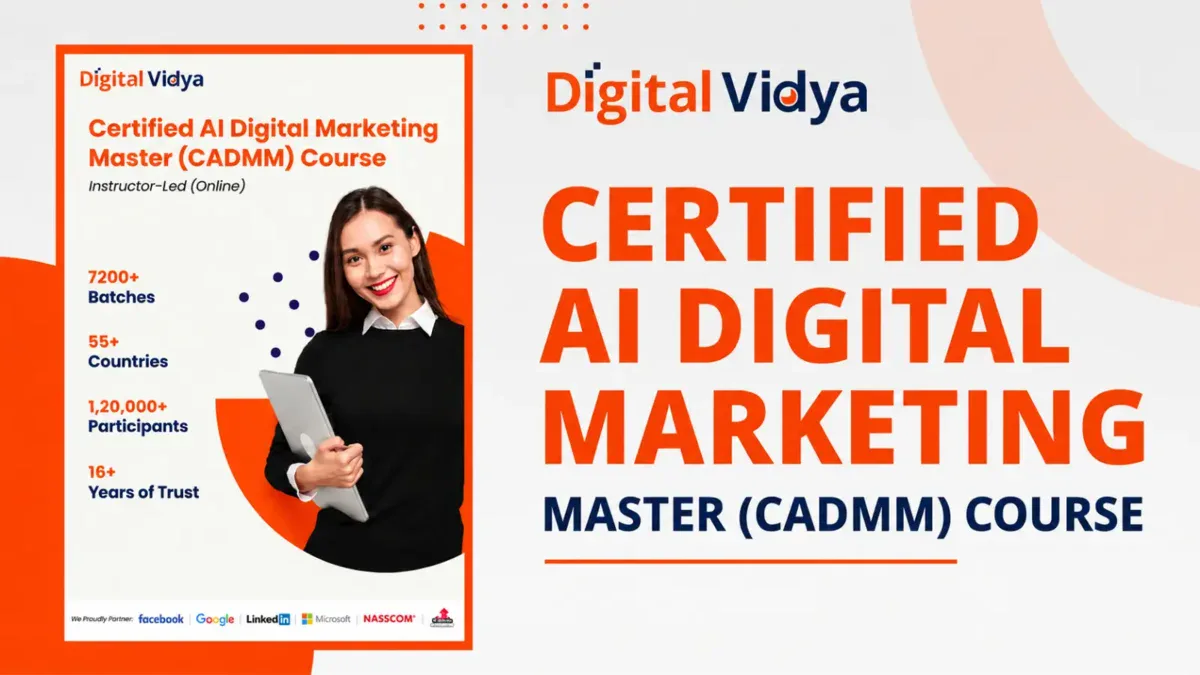
Hi Shivendra thanks for the informative blog post, I have gained some good insights on the topic of content marketing tutorial and have liked your content pyramid. I am looking at increasing visitors to my blog using content marketing to create value and PPC on the biggest search engines. As I do digital marketing tasks by myself, I think getting tutorials on AdWords and analytics also very important.
A good point is where you have explained how a digital marketer can organize their content and also look at the best content channels and related formats their targeted people utilize.
Thanks for brilliant post
Thanks for the appreciation.
Thanks for a brilliant post.
You’re Welcome
thank you for the loving post and more information
This complete 2025 digital marketing tutorial is a great resource for learning strategies, tools, and techniques to grow your business online.