
Key Takeaways
- Digital marketing is the promotion of products, services, and brands through digital channels such as search engines, social media, email, websites, and mobile apps.
- The global digital marketing market was valued at $653.65 billion in 2025 and is projected to reach $807 billion by 2026, growing at a 9.2% CAGR through 2035.
- The 10 core types include SEO, PPC, content marketing, social media marketing, email marketing, affiliate marketing, influencer marketing, video marketing, mobile marketing, and marketing automation.
- Digital marketing delivers measurable ROI: email marketing returns $36 for every $1 spent, and 49% of businesses say organic search delivers the best ROI.
- AI now powers 75% of daily marketing workflows, with 85% of marketing tasks automatable in 2026.
- Digital marketing careers are booming: marketing job demand is set to increase 10% by 2026, with roles like Digital Marketing Specialist among the top 10 in-demand jobs globally.
If you are brand new to this field, start with our introduction to digital marketing guide, which covers every channel, strategy framework, and trend you need to know as a beginner.
Affiliate marketing rewards partners for driving traffic or sales through referral links. To explore how this performance-based model works in the Indian market — including top programs, earning potential, and step-by-step instructions — read our complete guide to affiliate marketing in India.
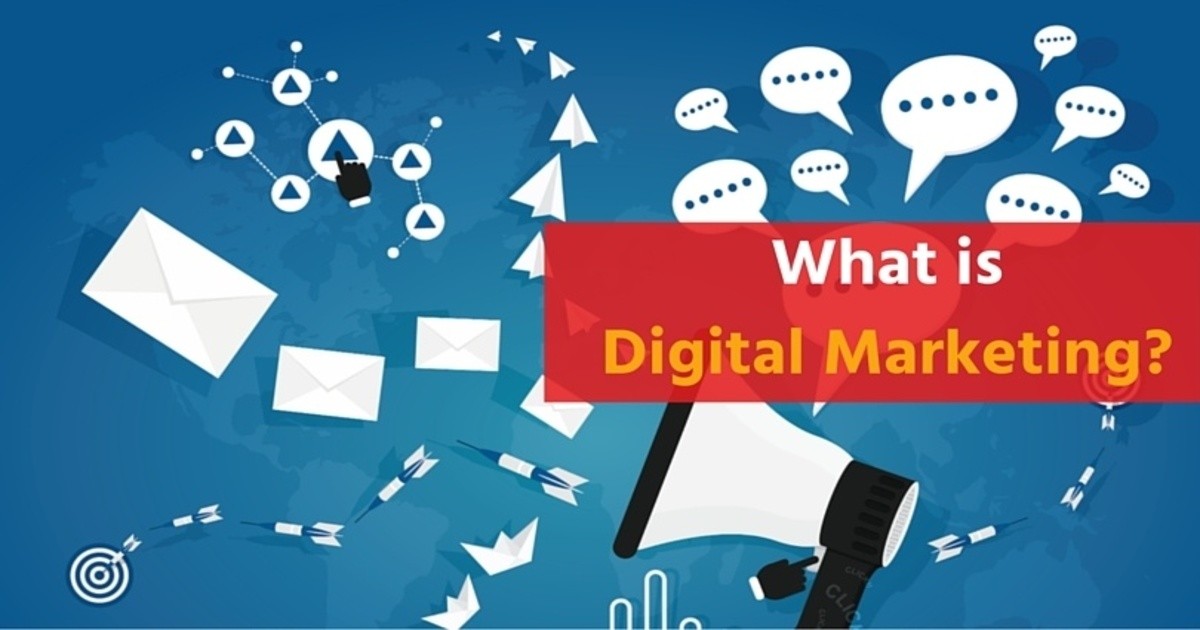
What is Digital Marketing?
Digital marketing is the use of digital channels and technologies to promote products, services, and brands to a target audience.
It encompasses all marketing efforts that occur on the internet and electronic devices, including search engines, social media platforms, email, websites, mobile apps, and online advertising.
Unlike traditional marketing methods such as print ads, billboards, and TV commercials, digital marketing enables businesses to reach specific audiences, track performance in real time, and optimise campaigns based on data.
Whether a startup with a limited budget or a multinational corporation, digital marketing provides scalable, cost-effective tools to connect with customers where they spend the most time — online.
In practical terms, digital marketing works like this: when someone searches on Google and clicks a result, that is search engine optimisation in action.
When a brand posts on Instagram to attract customers, that is social media marketing.
When a company sends a promotional email offering a discount, that is email marketing. All of these fall under the digital marketing umbrella.
The term is sometimes used interchangeably with “online marketing” or “internet marketing,” though strictly speaking, digital marketing is the broader concept.
It includes any marketing conducted through electronic devices — even offline digital channels like digital billboards and SMS — while online marketing specifically refers to internet-based activities.
Why Digital Marketing Matters in 2026
The numbers tell the story. There are over 5.5 billion internet users worldwide, representing more than 67% of the global population.
People spend an average of 6+ hours online daily. The global digital advertising market is projected to exceed $807 billion in 2026, and over 60% of total marketing spend is now allocated to digital channels.
For businesses, this means digital marketing is not optional — it is the primary way to reach customers. According to the Bureau of Labor Statistics, marketing job demand is set to increase by 10% by 2026, and digital marketing skills are classified among the fastest-growing in-demand competencies.
How Does Digital Marketing Work?
Digital marketing operates through a system of channels, strategies, and data that work together to attract, engage, and convert customers online. Here is how the process works at a fundamental level:
Step 1: Attract — Businesses use channels like SEO, paid ads, social media, and content to drive traffic to their digital properties (websites, landing pages, apps).
Step 2: Engage — Visitors interact with content, watch videos, read articles, browse products, or engage with social posts. Personalisation and retargeting keep them engaged.
Step 3: Convert — Through calls-to-action (CTAs), forms, checkout processes, and targeted offers, visitors become leads or customers.
Step 4: Analyse & Optimise — Tools like Google Analytics, heatmaps, and CRM platforms measure performance. Marketers use this data to refine targeting, messaging, and channel allocation.
This cycle — attract, engage, convert, optimise — is what separates digital marketing from traditional one-way advertising. It is inherently two-way, measurable, and iterative.
Inbound vs Outbound Digital Marketing
| Aspect | Inbound Marketing | Outbound Marketing |
|---|---|---|
| Approach | Pull — attracts customers through valuable content | Push — reaches out to audiences proactively |
| Channels | SEO, blogs, social media, email newsletters | PPC ads, cold emails, display ads, cold calling |
| Cost | Lower long-term cost, higher organic ROI | Higher upfront cost, immediate visibility |
| Audience | Self-selecting, high intent | Broadly targeted, variable intent |
| Examples | Blog post ranking on Google, YouTube tutorial | Google Search Ad, Facebook retargeting ad |
Most effective digital marketing strategies combine both inbound and outbound approaches, using inbound for long-term authority building and outbound for immediate lead generation.
What Are the Types of Digital Marketing?
Digital marketing spans a wide range of channels and tactics. Below are the 10 core types every business and marketer should understand, along with how each works and why it matters.
For a comprehensive breakdown of all marketing methodologies — including both digital and traditional approaches — explore our complete guide to 35 types of marketing every business should know.
1. Search Engine Optimisation (SEO)
SEO is the process of optimising website content, technical infrastructure, and backlink profile to rank higher in organic (unpaid) search engine results. It is the foundation of sustainable digital visibility.
SEO consists of three pillars: on-page SEO (keyword optimisation, content quality, meta tags, header structure), off-page SEO (backlinks, brand mentions, social signals), and technical SEO (site speed, mobile-friendliness, crawlability, structured data).
Why it matters: Organic search drives 53% of all website traffic. The top result on Google captures approximately 49% of clicks. SEO delivers $22 ROI for every $1 invested, making it one of the highest-ROI digital marketing channels.
Example: A digital marketing course provider optimises its landing pages for “best digital marketing course in India,” earning first-page rankings and consistent organic leads without ad spend.
→ Learn more: Complete SEO Tutorial for Beginners
2. Pay-Per-Click Advertising (PPC)
PPC is a paid advertising model where businesses pay a fee each time a user clicks their ad. The most common PPC platforms are Google Ads, Microsoft Ads, and Meta Ads (Facebook/Instagram).
PPC provides instant visibility on search engine results pages (SERPs) and social feeds. Advertisers bid on keywords or target specific demographics, and ads appear when users match targeting criteria.
Why it matters: PPC returns an average of $2 in revenue for every $1 spent. It is the fastest way to drive qualified traffic, particularly for new businesses or time-sensitive campaigns.
Example: An e-commerce brand runs Google Shopping ads for “running shoes for men,” appearing at the top of results and driving immediate sales.
→ Learn more: Search Engine Marketing Training
3. Content Marketing
Content marketing involves creating and distributing valuable, relevant content to attract, engage, and retain a defined audience. Rather than directly pitching products, it provides information that solves problems and builds trust.
Common content formats include blog articles, e-books, whitepapers, infographics, podcasts, newsletters, and video content. Content marketing works synergistically with SEO — quality content attracts organic traffic, which builds domain authority over time.
Why it matters: 61% of consumers are more likely to purchase from a brand that delivers custom content. The global content marketing industry revenue is estimated at $94 billion in 2025, expected to grow 10.4% in 2026.
Example: HubSpot’s blog generates millions of monthly visitors through educational content about marketing, sales, and customer service — positioning the brand as a thought leader and driving signups to its software.
→ Learn more: Content Marketing Strategy Guide
Content marketing relies heavily on professional content writing skills. To explore this specialization in depth, read our complete guide to starting a content writing career which covers the essential skills, tools, and strategies needed to produce marketing content that drives traffic and conversions.
4. Social Media Marketing (SMM)
Social media marketing uses platforms like Facebook, Instagram, LinkedIn, X (formerly Twitter), YouTube, and TikTok to build brand awareness, engage audiences, and drive website traffic or conversions.
SMM includes both organic activities (posting content, community management, responding to comments) and paid advertising (sponsored posts, lead generation ads, retargeting campaigns).
Why it matters: Social media has 5.24 billion users worldwide — approximately 64% of the global population. Over 72% of internet users research brands and products on social platforms before purchasing.
Example: Wendy’s uses a distinctive brand voice on X/Twitter, combining humour with engagement to create viral moments that amplify brand visibility without relying solely on ad spend.
→ Learn more: Social Media Marketing Course
5. Email Marketing
Email marketing is a direct communication channel where businesses send targeted messages to subscribers’ inboxes. Campaign types include newsletters, promotional offers, welcome sequences, post-purchase follow-ups, and re-engagement campaigns.
Why it matters: Email marketing delivers the highest ROI of any digital channel — $36 for every $1 spent, a 3,600% return. There are projected to be 4.73 billion email users by 2026, and emails with personalised subject lines generate 50% higher open rates.
Example: An online education platform sends a personalised email series to new subscribers: a welcome email, followed by free resources, then a limited-time course discount — nurturing leads toward enrolment.
→ Learn more: Email Marketing Course
6. Affiliate Marketing
Affiliate marketing is a performance-based model where businesses reward third-party publishers (affiliates) for driving traffic or sales through the affiliate’s marketing efforts. Affiliates earn commissions on conversions they generate.
Why it matters: The affiliate marketing industry was valued at over $13 billion in 2023 and continues growing. For 20% of brand marketers, affiliate marketing is the primary customer acquisition channel, and 54% rank it among their top three.
Example: A technology reviewer writes a detailed comparison article about web hosting services, includes affiliate links, and earns a commission for every signup generated through the review.
→ Learn more: Affiliate Marketing Guide
7. Influencer Marketing
Influencer marketing involves partnering with individuals who have established audiences and credibility within a specific niche. Brands collaborate with influencers to promote products or services to their followers through authentic endorsements.
Why it matters: 61% of Gen Z and millennials trust influencer recommendations. TikTok influencer campaigns average nearly 16% engagement rates, far exceeding traditional ad benchmarks.
Example: A skincare brand partners with a beauty influencer on Instagram Reels to demonstrate product application, reaching 500,000 followers with an authentic recommendation that drives both awareness and sales.
→ Learn more: Influencer Marketing Strategy
8. Video Marketing
Video marketing uses video content to promote brands, educate audiences, and drive engagement. Platforms include YouTube, TikTok, Instagram Reels, LinkedIn Video, and website-embedded videos.
Why it matters: 91% of businesses use video as a marketing tool. 87% of video marketers report positive ROI. Short-form video (under 60 seconds) is the dominant content format in 2026, outperforming other media types in both reach and engagement.
Example: A SaaS company creates a 90-second explainer video demonstrating its product’s key features, embedding it on the homepage and running it as a YouTube pre-roll ad — increasing trial signups by 34%.
→ Learn more: Video Marketing Tips
9. Mobile Marketing
Mobile marketing targets users on smartphones, tablets, and wearable devices through SMS, push notifications, in-app advertising, and mobile-optimised websites.
Why it matters: Smartphones drive over 77% of retail website visits globally. Mobile advertising accounts for 54% of total digital ad budgets. 57% of online purchases now happen on mobile devices.
Example: A food delivery app sends location-based push notifications with a lunch discount to users within a 3 km radius of partner restaurants, driving midday order spikes.
→ Learn more: Mobile Marketing tutorial
10. Marketing Automation
Marketing automation uses software and AI to automate repetitive marketing tasks — email sequences, social media scheduling, lead scoring, ad optimisation, and customer segmentation. Major platforms include HubSpot, Marketo, Mailchimp, and ActiveCampaign.
Why it matters: 85% of marketing tasks are now automatable. Companies using marketing automation see an average 32% productivity gain. Automation enables personalisation at scale — delivering the right message to the right person at the right time, without manual intervention.
Example: An e-commerce store sets up an automated cart abandonment email series: a reminder 1 hour after abandonment, a 10% discount after 24 hours, and a final urgency message at 72 hours — recovering 15% of abandoned carts.
→ Learn more: Marketing Automation Tutorial
Quick Comparison: Types of Digital Marketing at a Glance
| Type | Cost Model | Time to Results | Best For |
|---|---|---|---|
| SEO | Organic (time investment) | 3–6 months | Long-term visibility, authority |
| PPC | Pay per click | Immediate | Quick traffic, product launches |
| Content Marketing | Time/resource investment | 2–6 months | Thought leadership, organic leads |
| Social Media Marketing | Organic + Paid | 1–3 months | Brand awareness, engagement |
| Email Marketing | Low (platform fees) | Immediate | Retention, nurturing, ROI |
| Affiliate Marketing | Performance-based | 1–3 months | Scalable acquisition |
| Influencer Marketing | Flat fee or performance | Immediate | Brand credibility, niche audiences |
| Video Marketing | Production + distribution | 1–2 months | Engagement, explanation, trust |
| Mobile Marketing | Variable | Immediate | On-the-go engagement, local targeting |
| Marketing Automation | Software subscription | 1–2 months | Efficiency, personalisation at scale |
What Are the Benefits of Digital Marketing?
Digital marketing offers distinct advantages over traditional marketing approaches. These benefits explain why businesses of all sizes are reallocating budgets toward digital channels.
Cost-Effectiveness and Higher ROI
Digital marketing is significantly more affordable than traditional channels like TV, print, and radio. Small businesses can launch targeted social media campaigns or SEO strategies with minimal budgets.
PPC campaigns return $2 for every $1 spent, and email marketing delivers $36 per $1 invested — ROI figures traditional channels cannot match.
Precise Audience Targeting
Unlike broadcast advertising where messaging reaches everyone indiscriminately, digital marketing enables granular targeting.
Marketers can target audiences by demographics, interests, behaviour, location, device type, and even purchase history. This precision reduces wasted spend and improves conversion rates.
Real-Time Performance Measurement
Digital marketing provides immediate, detailed analytics. Marketers track impressions, clicks, conversions, cost per lead, customer lifetime value, and return on investment in real time. Tools like Google Analytics, SEMrush, and platform-native dashboards make data accessible and actionable.
Global Reach with Local Precision
A single digital campaign can reach audiences worldwide, or be narrowed to users within a specific city, neighbourhood, or radius. This flexibility benefits both global brands and local businesses optimising for local SEO.
Personalisation at Scale
Data-driven digital marketing enables businesses to deliver personalised experiences to thousands or millions of users simultaneously.
Email segmentation, dynamic website content, personalised ad creative, and AI-powered product recommendations create tailored experiences that drive higher engagement and loyalty.
Two-Way Communication
Traditional marketing is one-directional: a billboard cannot respond to questions. Digital marketing enables real-time conversations through social media comments, chatbots, live chat, email replies, and community forums. This dialogue builds trust and deepens customer relationships.
Level Playing Field for Small Businesses
A small business with a smart digital marketing strategy can outperform larger competitors in specific niches.
Organic SEO rankings, viral social media content, and targeted PPC campaigns give smaller players visibility disproportionate to their budgets.
Digital Marketing vs Traditional Marketing: What’s the Difference?
Understanding the distinction between digital and traditional marketing helps businesses allocate resources effectively.
| Factor | Digital Marketing | Traditional Marketing |
|---|---|---|
| Channels | Search engines, social media, email, websites, apps | TV, radio, newspapers, magazines, billboards |
| Targeting | Precise (demographics, behaviour, interests) | Broad (geographic, demographic) |
| Measurability | Real-time analytics, granular data | Difficult to measure, estimated reach |
| Cost | Scalable; start with any budget | High minimum spends (TV, print) |
| Interaction | Two-way (comments, shares, replies) | One-way (broadcast) |
| Speed | Launch and adjust campaigns in hours | Weeks/months for production and placement |
| Reach | Global, 24/7 | Limited by geography and schedule |
| Personalisation | High (dynamic content, segmentation) | Low (same message to all) |
Both approaches have their place. The most effective marketing strategies in 2026 use an integrated approach — leveraging digital for targeting, measurement, and personalisation, while using traditional media for broad brand awareness when budget allows.
While digital marketing excels at attracting and nurturing prospects at scale, it works hand-in-hand with sales to drive revenue. The most effective digital marketing strategies generate qualified leads that sales teams can close efficiently. Learn how sales and marketing differ — and how aligning both functions can boost your results by over 200%.
How to Build a Digital Marketing Strategy: Step-by-Step
A successful digital marketing strategy requires planning, execution, and continuous optimisation. Here is a six-step framework any business can follow.
Step 1: Define Your Goals and KPIs
Start with clear, measurable objectives aligned with business outcomes. Common digital marketing goals include increasing website traffic, generating leads, improving conversion rates, growing brand awareness, or boosting e-commerce revenue.
Attach specific KPIs (Key Performance Indicators) to each goal: monthly organic sessions, cost per lead, email open rate, social media engagement rate, or customer acquisition cost.
Step 2: Identify and Research Your Target Audience
Define who your ideal customers are using buyer personas. Research their demographics, online behaviour, preferred platforms, pain points, and content preferences. Use tools like Google Analytics, social media insights, and customer surveys to build data-driven audience profiles.
Step 3: Choose Your Digital Marketing Channels
Select channels based on where your audience spends time and what aligns with your goals. A B2B software company may prioritise LinkedIn, SEO, and email marketing, while a D2C fashion brand may focus on Instagram, influencer partnerships, and Google Shopping ads.
Step 4: Create a Content Plan
Map content to each stage of the marketing funnel:
- Top of Funnel (Awareness): Blog posts, social media content, educational videos, infographics
- Middle of Funnel (Consideration): Case studies, webinars, comparison guides, email nurture sequences
- Bottom of Funnel (Conversion): Product demos, free trials, testimonials, retargeting ads
Step 5: Set and Allocate Your Budget
Determine how much to invest across channels. A common allocation for small businesses is 5–10% of revenue toward digital marketing.
Distribute budget based on historical performance and channel potential. Start with proven channels and test new ones with smaller allocations.
Step 6: Launch, Measure, and Optimise
Execute campaigns, monitor performance against KPIs, and iterate. A/B test ad creative, email subject lines, landing pages, and CTAs. Digital marketing’s greatest advantage is the ability to optimise continuously — use data to double down on what works and cut what doesn’t.
→ Want to master these skills? Explore the Certified Digital Marketing Master (CDMM) Program by Digital Vidya — a comprehensive training certified by Google, Meta, LinkedIn, and HubSpot.
B2B vs B2C Digital Marketing: Key Differences
The approach to digital marketing varies significantly based on whether a business targets other businesses (B2B) or individual consumers (B2C).
| Aspect | B2B Digital Marketing | B2C Digital Marketing |
|---|---|---|
| Decision-making | Multiple stakeholders, longer cycle | Individual or household, shorter cycle |
| Buying motivation | Logic, ROI, efficiency | Emotion, desire, convenience |
| Content tone | Professional, data-driven, educational | Conversational, entertaining, aspirational |
| Key channels | LinkedIn, SEO, email, webinars | Instagram, TikTok, Google Ads, YouTube |
| Sales cycle | Weeks to months | Minutes to days |
| Metrics focus | Lead quality, pipeline value, MQLs | Conversion rate, revenue, ROAS |
Effective digital marketers tailor their strategy to their audience. A B2B content strategy emphasises whitepapers and case studies, while B2C thrives on visually engaging social content and influencer endorsements.
Digital Marketing Trends Shaping 2026
The digital marketing landscape evolves rapidly. Here are the most significant trends defining the industry in 2026.
AI-Powered Marketing Is the New Standard
Artificial intelligence has moved from experimental to foundational. In 2026, 75% of marketers use AI daily for content creation, data analysis, campaign optimisation, and customer segmentation.
Tools like ChatGPT, Jasper, Google Gemini, and Adobe Sensei power everything from ad copy generation to predictive analytics. The key differentiator is not whether a business uses AI, but how strategically it deploys AI alongside human creativity.
Generative Engine Optimisation (GEO)
With AI-powered search (Google AI Overviews, Perplexity, ChatGPT search) growing rapidly, marketers must optimise content not just for traditional search engines but for generative AI systems.
This means creating authoritative, well-structured, entity-rich content that AI can understand, cite, and summarise. Brands that appear in AI-generated answers gain visibility in an increasingly zero-click search environment.
Short-Form Video Dominance
Short-form video (TikTok, Instagram Reels, YouTube Shorts) continues to outperform all other content formats in reach and engagement.
Marketers report it delivers the best ROI among social media formats. Video-first content strategies are now standard practice, not optional add-ons.
Privacy-First Marketing
With GDPR, CCPA, and growing privacy regulations worldwide, first-party data has become the most valuable marketing asset.
Third-party cookie deprecation is reshaping targeting strategies. Brands investing in email lists, loyalty programmes, and direct relationships are better positioned for sustainable growth.
Authenticity and Human-First Content
As AI-generated content floods the internet, audiences and algorithms increasingly reward authentic, human-created content. User-generated content (UGC), employee advocacy, behind-the-scenes video, and original research stand out in a sea of generic AI-produced material. The brands winning in 2026 combine AI efficiency with genuine human storytelling.
Is Digital Marketing a Good Career in 2026?
Digital marketing is one of the fastest-growing career fields globally. Here’s why it presents a strong opportunity.
Job demand is rising: Marketing job demand is projected to increase 10% by 2026, above the average for all careers. “Digital Marketing Specialist” is among LinkedIn’s top 10 most in-demand job titles globally.
Salaries are competitive: Entry-level digital marketing roles in India typically start at ₹3–6 LPA, with mid-level professionals earning ₹8–15 LPA and senior specialists or managers earning ₹15–30+ LPA. Globally, digital marketing managers in the US earn $65,000–$120,000+ annually.
Diverse specialisations: Professionals can specialise in SEO, paid media, content strategy, social media management, email marketing, data analytics, marketing automation, or conversion rate optimisation — each offering distinct career paths.
Accessible entry points: Unlike many tech roles, digital marketing does not require a specific degree. Skills-based certifications, practical experience, and portfolio projects can launch a career. Programmes like the CDMM by Digital Vidya provide structured training with industry-recognised certifications.
Freelancing and entrepreneurship: Digital marketing skills are directly applicable to freelancing, consulting, and building online businesses. Many professionals transition from employment to running their own agencies or e-commerce ventures.
→ Explore career opportunities: Scope of Digital Marketing in 2026
If you’re serious about building a career in digital marketing, the first step is understanding the complete curriculum. Our detailed guide to digital marketing course content covering 14+ modules breaks down every topic — from SEO and Google Ads to AI-powered marketing and analytics — so you can evaluate training programs with confidence before enrolling.
Essential Digital Marketing Tools and Platforms
Effective digital marketing requires the right technology stack. Here are the categories and leading tools professionals use.
| Category | Popular Tools | Purpose |
|---|---|---|
| SEO | Ahrefs, SEMrush, Moz, Google Search Console | Keyword research, rank tracking, site audits |
| PPC | Google Ads, Meta Ads Manager, Microsoft Ads | Paid search and social ad management |
| Analytics | Google Analytics 4, Hotjar, Mixpanel | Website and user behaviour analysis |
| Email Marketing | Mailchimp, ConvertKit, HubSpot Email | Email campaigns, automation, sequences |
| Social Media | Hootsuite, Buffer, Sprout Social | Scheduling, monitoring, analytics |
| Content Creation | Canva, Adobe Creative Suite, Jasper | Design, copywriting, video editing |
| Marketing Automation | HubSpot, Marketo, ActiveCampaign | Workflow automation, lead scoring, CRM |
| CRM | Salesforce, HubSpot CRM, Zoho CRM | Customer relationship management |
→ Learn these tools hands-on: Digital Marketing Tools Guide
Digital Marketing Statistics You Should Know in 2026
| Statistic | Source |
|---|---|
| Global digital marketing market: $653.65B in 2025, projected $807B by 2026 | Expert Market Research |
| Digital marketing growing at 9.2% CAGR (2026–2035), reaching $1.58T by 2035 | Expert Market Research |
| 53% of all website traffic comes from organic search | BrightEdge |
| Email marketing ROI: $36 for every $1 spent | Litmus |
| 91% of businesses use video marketing | Wyzowl |
| 75% of marketers use AI in daily workflows | Incremys |
| 85% of marketing tasks are automatable | Incremys |
| Mobile drives 77% of retail website visits | Statista |
| 5.24 billion social media users worldwide | DataReportal |
| Marketing job demand increasing 10% by 2026 | Bureau of Labor Statistics |
If you are considering digital marketing as a career, the next logical step is understanding which specific roles exist, what they pay, and how to land them. The field now spans over 20 distinct job profiles — from hands-on specialists (SEO, PPC, email marketing) to strategic leaders (Product Marketing Manager, Growth Marketing Manager, CMO). Explore the complete list of digital marketing jobs and career opportunities in 2026, with salary data for India and global markets, required skills for each role, and a step-by-step fresher hiring guide.
Frequently Asked Questions (FAQ)
What are the main types of digital marketing?
The main types of digital marketing include search engine optimisation (SEO), pay-per-click advertising (PPC), content marketing, social media marketing, email marketing, affiliate marketing, influencer marketing, video marketing, mobile marketing, and marketing automation. Each channel serves a different purpose within the overall digital strategy, from building long-term organic visibility to driving immediate paid traffic.
How is digital marketing different from traditional marketing?
Digital marketing uses online channels (search engines, social media, email, websites) and provides precise targeting, real-time measurement, and two-way communication. Traditional marketing uses offline channels (TV, radio, print, billboards) with broader targeting and limited measurability. Digital marketing is generally more cost-effective and offers faster campaign adjustment, while traditional marketing can deliver broad brand awareness. Most businesses in 2026 use a combination of both.
Is digital marketing a good career in 2026?
Yes, digital marketing is among the fastest-growing career fields. The Bureau of Labor Statistics projects 10% growth in marketing jobs by 2026, above the national average. Entry points are accessible through certifications and practical projects, and the field offers diverse specialisations including SEO, PPC, content strategy, social media, analytics, and marketing automation. Salaries range from ₹3–6 LPA (entry-level India) to $120,000+ (senior-level US).
How much does digital marketing cost for a small business?
Small businesses typically allocate 5–10% of revenue toward digital marketing. Actual costs vary by channel: organic SEO and content marketing require primarily time and expertise, while PPC campaigns can start from as little as ₹500–1,000/day (or $10–20/day). Email marketing platforms offer free tiers for small lists, and social media posting is free, with paid advertising available at any budget. The key advantage of digital marketing is its scalability — businesses can start small and increase investment as they see results.
How do I start learning digital marketing as a beginner?
Begin with a structured overview of all core channels (SEO, PPC, social media, email, content). Free resources from Google Digital Garage, HubSpot Academy, and YouTube tutorials provide foundational knowledge. For comprehensive, career-ready training, enroll in a certified programme such as the CDMM Course by Digital Vidya, which covers all major channels with hands-on projects and certifications from Google, Meta, LinkedIn, and HubSpot. Practice by building your own blog, running small ad campaigns, and analysing results.
Conclusion
Digital marketing in 2026 is the primary engine of business growth, customer acquisition, and brand building. From SEO and PPC to AI-powered automation and short-form video, the range of channels and strategies continues to expand, offering businesses of every size the tools to compete and succeed online.
The fundamentals remain constant: understand your audience, create valuable content, measure results, and optimise continuously. What has changed is the sophistication of the tools, the intelligence of the platforms, and the expectation of personalised, authentic experiences from consumers.
Whether you are a business owner looking to grow online, a marketing professional expanding your skill set, or a beginner exploring a new career path, mastering digital marketing opens doors to measurable, scalable, and rewarding outcomes.
→ Ready to build your digital marketing expertise? Explore the Certified Digital Marketing Master (CDMM) Programme by Digital Vidya — India’s leading digital marketing training with certifications from Google, Meta, LinkedIn, and HubSpot.
Social media marketing is one of the most popular digital marketing channels, offering strong career prospects. Professionals earn between ₹1.8 LPA (fresher) and ₹32 LPA (director). Learn more about social media marketing career and salary in our detailed guide.
Content marketing through blogging drives 55% more website visitors for businesses — follow our step-by-step guide to start a blog and build your content marketing engine.




Hey,
Thanks for sharing digital marketing information for begging marketers.
In simple word, Digital Marketing is used marketing products and services with digital technology through internet, and it is increasing sales revenue for the business.
Good article and brief information about the digital marketing. Thank you..
Nice article, read many of your articles and got inspired and started my own blogging journey, Thanks.
Great Article
Good article and brief information about digital marketing. if you must also like more to know about about Digital marketing basics you can visit my website.
Hey,
Thanks for sharing more information about the digital marketing for basic fundamental ..
In simple word , Digital Marketing is used marketing product and services through by digital technology through internet and online for more connected people the digital marketing and and achieving more profit.
good information about digital marketing.
Thank you for this post.
You’re Welcome